REVIEW · SAVANNAH
Heart of Savannah History Walking Tour – 2hr
Book on Viator →Operated by Explore Savannah · Bookable on Viator
Savannah makes sense after two guided hours. This Heart of Savannah History Walking Tour threads you through famous squares and the kind of smaller, off-the-radar details that make the historic district click fast, then sends you to the Forsyth Park Fountain at the end. You get a local guide, a mobile ticket, and an easy walking loop that’s built for first-timers who want a strong orientation without overplanning.
What I like most is the balance of big names and street-level stories, from the American Revolution and Civil War to pop-culture stops tied to the movie world. I also love that the guide time is spent on making the city understandable street by street, not just reading dates at you. One possible drawback: this is a walking tour in the open, so you will want to plan for heat and humidity and bring what you need to stay comfortable.
With a max group size of 30, the pace feels friendly, and the reviews are consistently high, including standout guides like Rick Moss, Mark, Crystal, and Rose. Still, if you dislike darker or spooky-style stories, know that the route includes at least one famously haunted stop, even if you only pass it on foot.
In This Review
- Key Things You’ll Remember From This Walk
- Two Hours to Get Your Bearings in Savannah’s Historic District
- Wright Square and the Gordon Monument: How Savannah Began
- Juliette Gordon Low’s Birthplace: Founder Story Without the Museum Rush
- Independent Presbyterian Church: Fires, Hurricanes, and a Steeple With a Story
- Chippewa Square and the Forrest Gump Sit Spot
- Sorrel Weed House: Haunted Savannah and the Brick Wall Detail
- Madison Square: The Siege of Savannah Comes to Life
- Gothic Architecture Meets Sherman’s March: Green-Meldrim House
- The SCAD-Era Building, then Gryphon Tea Room and Solomon’s Apothecary
- Midnight in the Garden of Good and Evil: Mercer Williams House Outside Viewing
- Armstrong-Kessler House: The One You Gawk At From the Street
- Forsyth Park Fountain: The Mail-Order Finish That’s Worth the Photo
- Small-Group Feel, Big Storytelling Energy
- Should You Book This Heart of Savannah History Walk?
- FAQ
- How long is the Heart of Savannah History Walking Tour?
- Where does the tour start and end?
- Is the tour in English?
- How much walking is involved?
- Do I need any entry tickets for the stops?
- Does the tour run in bad weather?
- What should I bring for comfort?
- What is the cancellation and refund policy?
Key Things You’ll Remember From This Walk

- Wright Square orientation: you start at the Gordon Monument and learn how and why the colony was placed on a bluff
- Forsyth Park as a payoff: the tour ends at the fountain, with details about the park’s size and the water feature’s origins
- Film-location storytelling: Chippewa Square includes the Forrest Gump sit spot, so the movie references feel grounded
- Architecture with context: you see Gothic details at the Green-Meldrim House and connect them to Civil War command history
- Mini history stops, no museum fatigue: most stops are quick, with several designed for photos from the sidewalk
- Even the “in-between” buildings get explained: you pass sites tied to SCAD and historic commerce like an apothecary
Two Hours to Get Your Bearings in Savannah’s Historic District
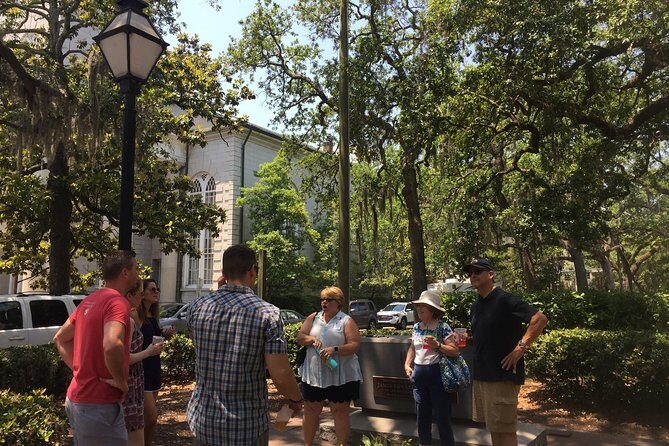
This is the kind of tour that pays off on day one. In about two hours, you cover key squares and landmark streets in the historic district, then finish at Forsyth Park—one of the most central green spaces in town. If you’re the type who likes to walk a city instead of studying it from a map, this format helps you build a mental picture of Savannah’s layout and priorities.
The route is designed around short stops and a manageable walk. The tour description targets about a mile of walking, with benches along the way, so it’s not a marathon. You’ll also have multiple photo moments, and the itinerary is paced so you’re not stuck in long lines at museums.
Time-wise, you can choose a morning or afternoon departure, which matters in Savannah. Summers can be hot and sticky, and even spring can feel warm once you’re out in full sun. Bring a bottle of water, and if weather shifts, plan for rain too; the tour runs rain or shine.
Other walking history tours in Savannah


Wright Square and the Gordon Monument: How Savannah Began
Your tour begins in Wright Square, at the north side center, in front of the Gordon Monument. This is a smart starting point because it sets the whole city story up right away: Savannah’s founding purpose, the placement on a 40-foot bluff, and what the square layout reveals about how the colony was organized.
Here’s the kind of detail that makes the rest of your walk easier: you’re not just shown landmarks—you’re told what problem they solved back then. Squares weren’t random ornaments. They were built into the colony’s design, and you learn how and why they took the shape you see today.
You’ll also hear about the Port of Savannah and that it ranks as the third largest port in the nation. That’s a good reminder that this city isn’t only about the 1700s and 1800s. It still functions as a major gateway.
And then there’s Tomochichi. You learn who he was—chief of the Yamacraw Indians—and you’re told he’s buried under the Gordon Monument in the center of Wright Square. It’s one of those moments where you realize you’re standing on history that still anchors the space.
Practical tip: spend a few seconds scanning the monument and surrounding corners before you move on. Once you know the story, the square stops looking like scenery and starts looking like a map.
Juliette Gordon Low’s Birthplace: Founder Story Without the Museum Rush
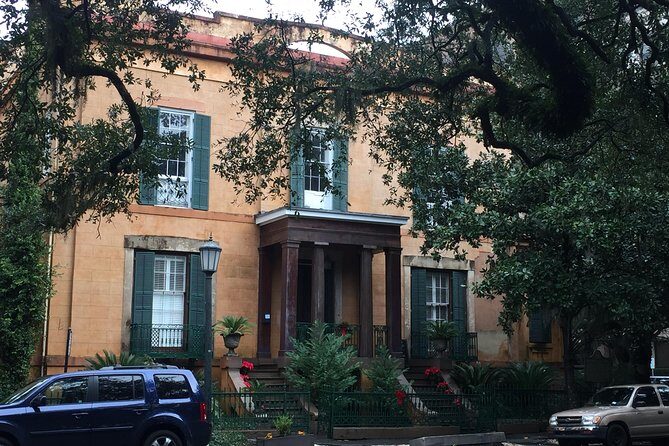
Next up is the Juliette Gordon Low Birthplace Museum area. You admire the birthplace of Juliette Gordon Low, the founder of the Girl Scouts, born here on October 31, 1860. This stop is brief and focused, and that’s part of the value: you get the key idea fast, then move on before the rest of the day drifts away.
The tour also clarifies something important: you do not go into the home. You’ll see it from the outside. So if you’re hoping for a full interior museum experience, you won’t get that on this stop. But you will still get the family and context, plus a clear reason this site matters.
Why it’s worth it anyway: a quick stop like this gives you names to remember. Later, when you’re walking around Savannah on your own, these anchors help you connect buildings to people instead of treating everything as facades.
Independent Presbyterian Church: Fires, Hurricanes, and a Steeple With a Story
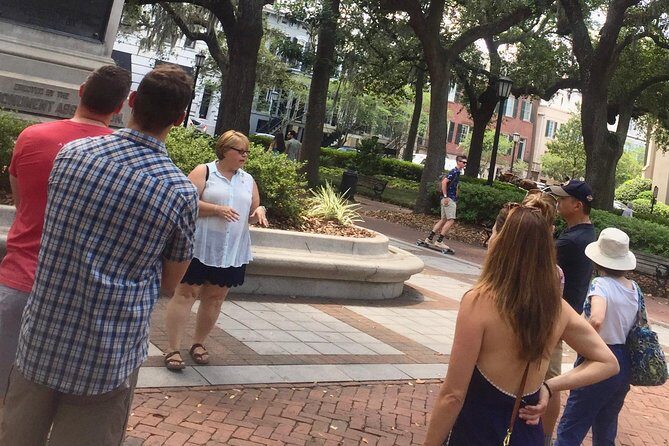
At the Independent Presbyterian Church stop, you’re in the orbit of a building line that survived repeated setbacks. The church was founded in 1755 on Ellis Square, originally Market Square. It was destroyed by fire, then rebuilding happened on Telfair Square, only for that version to be destroyed by a hurricane. Today, the church sits on the corner of Bull St and Oglethorpe Ave, built in 1855.
One of the most useful bits here is the human detail. You’ll learn which U.S. president was married in the church in 1885, and you’ll also hear why the steeple is famous today. Even in a short stop, you’re getting a mix: architecture and a specific life event tied to the building.
Potential consideration: since this is a quick photo-and-story stop, don’t expect time for lingering. If you like slow looking, plan to come back later after the tour finishes.
Chippewa Square and the Forrest Gump Sit Spot
Chippewa Square is where pop culture and historic place-making overlap. This stop includes where Forrest Gump sat with his box of chocolates while waiting for the bus—an instantly recognizable filming location moment.
At the same time, the tour keeps it grounded in Savannah’s actual founding story. The monument in the center of Chippewa Square is General James Oglethorpe, not Captain Morgan. The guide even points out the resemblance, and that Savannah’s to-go cup culture makes the comparison feel more than random humor.
You’ll learn about the man behind the colony and what the monument represents. For first-timers, this is a helpful reset: you’re not just collecting trivia. You’re linking the city’s image to its origins.
Photo tip: aim for this stop at a moment when the square has less foot traffic, if you can. If not, still take the picture—because the story makes the landmark feel like more than a background.
Other walking tours we've reviewed in Savannah





Sorrel Weed House: Haunted Savannah and the Brick Wall Detail
You pass by the Old Sorrel Weed House Museum & Tours, a home known as one of Savannah’s most haunted properties. The tour focuses on something you can actually see from the street: the Savannah gray brick wall surrounding the courtyard and the explanation connected to fingerprints in the brick.
You’ll hear the question the guide wants you to wonder about—where that brick came from—and you’ll get the kind of spooky, street-level lore Savannah is famous for. Even if you’re not a ghost story person, this stop often becomes a memorable break from the more formal founding and war stories.
If you’re sensitive to ghost-style tales: this part of Savannah leans into the darker side. You’re only passing the property, but the story angle is part of what you’re buying with the tour.
Madison Square: The Siege of Savannah Comes to Life
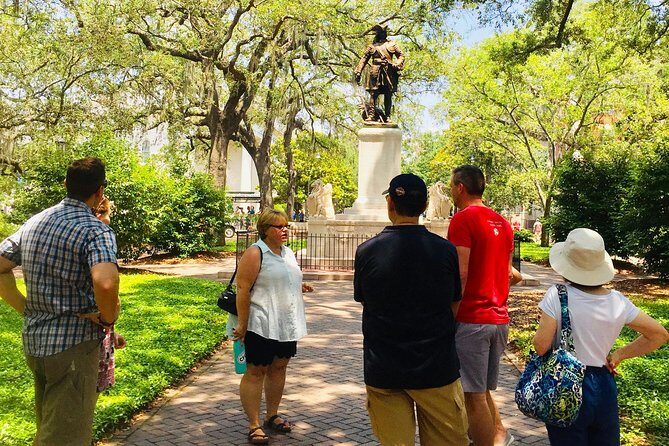
At Madison Square, you learn that where the square sits today used to hold one of the bloodiest battles during the American Revolution—the Siege of Savannah. It’s a useful stop because it turns a pretty public space into a point on the Revolutionary map.
You’ll get the sense that Savannah wasn’t just a trading port and a set of squares. It was a strategic target, and that shaped what happened here.
This kind of context is what makes your later self-guided walking more meaningful. A square with a monument becomes an event location. That makes the city feel less like a postcard and more like a timeline.
Gothic Architecture Meets Sherman’s March: Green-Meldrim House
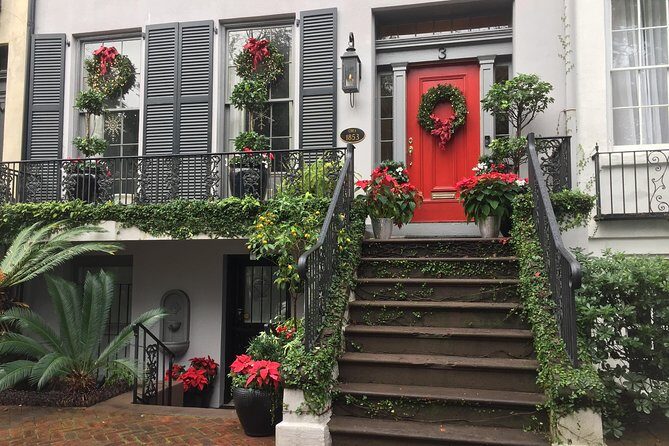
Then you reach Green-Meldrim House, completed in 1853. This is one of the area’s best examples of Gothic architecture in the South. The tour also gives you a strong sense of scale and status: the house cost $93,000 at the time, or about $3.2 million today, and it was the most expensive home in Savannah during the 1800s.
But the stop isn’t just about style. You also hear how this house made history as Headquarters for General Sherman during his March to the Sea, when he occupied Savannah. In other words, a rich private home and a military command center end up sharing the same address in your mind.
When tours do architecture well, they help you see the building’s choices as decisions made in history—not just aesthetics. That’s what this stop aims for.
The SCAD-Era Building, then Gryphon Tea Room and Solomon’s Apothecary
After that, you pass a building that was originally used as the Savannah Volunteer Guard building, now owned by SCAD. You don’t spend long here, but you still get the continuity—how older structures get repurposed while the city’s identity stays visible.
Next comes the Gryphon Tea Room, located inside what’s called the Shriner’s Building. Inside the tea room is a museum in itself, tied to the earlier life of the space as Solomon’s Apothecary. You’ll see or at least learn about the original mahogany cabinetry and cubbies used to store medicines.
This is the type of stop that makes you realize Savannah’s history isn’t only war and politics. It’s also commerce, health, and the way everyday life worked in older buildings. And the tea room aspect makes it practical: if you want a place to eat after the tour, this is one of the natural options in the story.
Midnight in the Garden of Good and Evil: Mercer Williams House Outside Viewing
One of the most famous storytelling stops in the route is the Mercer Williams house, made widely known by the book Midnight in the Garden of Good and Evil by John Berendt. You’ll connect the site to the real events: Jim Williams purchased the home in 1969, and in 1981 his assistant Danny was shot. The book came out in 1993 and stayed on New York best seller lists for 216 weeks—longer than any book in history, according to the tour’s notes. Later, the movie release helped put Savannah more squarely on the tourism map.
The tour gives you a smart visitor strategy here. If you have time before or during your trip, you can read the book—or at least watch the movie—so the place hits you with context when you arrive.
Value note: if you’re the kind of person who likes scavenger-hunting for recognizable scenes, this stop is a payoff. It also helps if you want a grounded, real-story version of the folklore.
Armstrong-Kessler House: The One You Gawk At From the Street
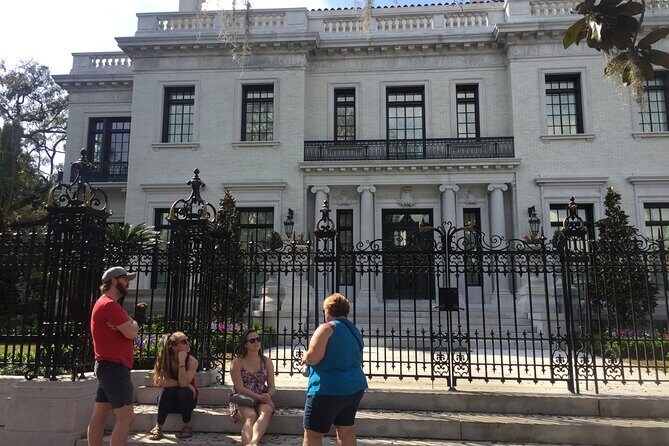
The Armstrong House, now known as the Armstrong-Kessler house, is the final major “wow” moment before the tour wraps. You learn its history and what’s happening there now. The home is huge—26,000+ square feet—and it’s described as the one house in town where people stop and gasp.
This is also a private home, and it’s not open for tours. That’s why the “ticket not included” detail matters: you’re meant to see the exterior and move on, not try to enter.
Even so, this kind of exterior stop can be perfect for your first trip. You get the sense of the scale and style of the city without losing time to a museum schedule.
Forsyth Park Fountain: The Mail-Order Finish That’s Worth the Photo
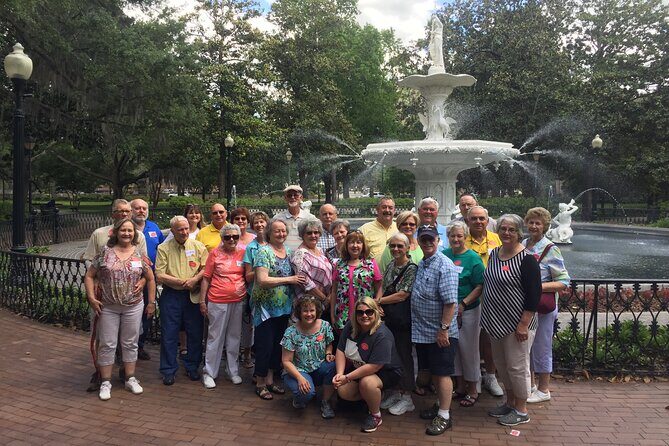
The tour ends at Forsyth Park, finishing at the Fountain. Forsyth Park starts at 1848 with 10 acres, and today it covers 30 acres. The guide calls it the city’s central park, a place enjoyed by young and old alike.
But the real payoff is the fountain, described as the crowning jewel of Savannah’s park life. What many people miss is that the fountain was a catalog mail order from France, installed in 1858. That detail lands because it reframes the fountain from a random local ornament into an international piece of design that made its way here.
You’ll get time to take your picture in front of the fountain, which is a classic Savannah moment for a reason. Plan to stick around long enough to get one clean photo without rushing.
Practical tip: if you’re continuing your day after the tour, Forsyth Park is a great pivot point. It’s a natural place to reset your legs, check directions, and decide what you want next.
Small-Group Feel, Big Storytelling Energy
One pattern pops up across the experience: the best part is the way your guide stitches together facts, names, and scenes. The tour has a 4.9 rating and is recommended by 97% of travelers. That’s not just marketing fluff. It usually means the guide performance is doing real work—answering questions, keeping the stories lively, and making sure the route stays interesting.
You may hear humor and quick side notes along the way. In the review record for this experience, guides like Rick Moss, Mark, Crystal, and Rose show up repeatedly for being both entertaining and focused. That matters because in a two-hour walking tour, you only have so much time. A guide who can keep the story moving helps you get more out of each stop.
Should You Book This Heart of Savannah History Walk?
I’d book it if:
- you’re visiting for the first time and want a fast, accurate orientation through Savannah’s squares
- you like architecture plus real event context, not just sightseeing photos
- you want film-location moments explained in a historical frame
- you prefer a guided route that stays short on museum time and long on street-level storytelling
I’d think twice if:
- you dislike haunted lore or darker anecdotes, since the itinerary includes a famously haunted property
- you need long rest breaks, because the tour is designed around steady walking and brief stops
If you’re trying to choose between doing everything on your own versus getting a structured start, this is a strong middle path. You leave with names, layouts, and story threads you can follow later across the historic district.
FAQ
How long is the Heart of Savannah History Walking Tour?
It runs about 2 hours.
Where does the tour start and end?
It starts at Wright Square in Savannah and ends at Forsyth Park at the Fountain.
Is the tour in English?
Yes, it is offered in English.
How much walking is involved?
The tour involves approximately 1 mile of walking, with benches along the way.
Do I need any entry tickets for the stops?
Most stops are listed as free admission. The Armstrong house stop notes admission is not included, and the rest of the route is free to view from the outside.
Does the tour run in bad weather?
The tour operates rain or shine. If severe weather happens, you’ll be offered an option to reschedule or a full refund if the tour is canceled by the provider.
What should I bring for comfort?
Wear comfortable walking shoes, consider bringing an umbrella, and in summertime bring water due to hot and humid conditions.
What is the cancellation and refund policy?
You can cancel for a full refund up to 24 hours in advance. If you cancel less than 24 hours before the start time, the amount you paid will not be refunded.