REVIEW · SAVANNAH
History of Savannah Walking Tour
Book on Viator →Operated by Sarah Johnson · Bookable on Viator
A great Savannah primer fits in 90 minutes. This walking tour gives you a clear overview of how the city grew, with real stops you can trace on your own after. You’ll also get guide commentary at every square and landmark, not just a quick photo stop.
I love the small-group size (max 15), which keeps the pace human and the questions flowing. And I really like that it stays focused on the Historic District highlights—Jones Street, Monterey Square, and Forsyth Park—so you leave with a mental map that actually works.
One thing to consider: it’s still a walking tour. You’ll be on sidewalks that can be uneven, and it runs best in good weather, since the experience can be adjusted or canceled if conditions aren’t right.
In This Review
- Key Points at a Glance
- A Fast, Friendly Orientation for Your Savannah Days
- Chippewa Square: Oglethorpe and the Start of Savannah
- Juliette Gordon Low Birthplace: Girl Scouts Origins Without the Ticket Hassle
- Wright Square and Tomochichi: The Native Story in the City’s Early Days
- Owens-Thomas House and Slave Quarters: Slavery’s Impact Up Close
- Colonial Park Cemetery: Victorian Life, Death, and Story Details
- Cathedral of St. John the Baptist: Irish Influence in Savannah
- Green-Meldrim House: Civil War Connections Without Overstating It
- Jones Street and Monterey Square: Beauty Meets Revolutionary Connections
- Forsyth Park Fountain: Ending With a Landmark You’ll Remember
- Price and Pace: Getting Value From $35
- Logistics That Actually Matter: Mobile Tickets and Real Walking Comfort
- Who Should Book This Tour (and Who Might Skip It)
- Should You Book the History of Savannah Walking Tour?
- FAQ
- How long is the walking tour?
- What does the tour cost?
- Is the tour offered in English?
- Where does the tour start and end?
- How many people are in a group?
- Do you enter museums or paid businesses?
- Who is the guide?
- Do I get a mobile ticket?
- What if the weather is bad or I need to cancel?
Key Points at a Glance

- Max 15 people for a calmer pace and easy Q&A
- Sarah Johnson leads the tour and brings the stories to life at each stop
- Top Historic District stops including Chippewa Square, Wright Square, and Forsyth Park
- No museum entry—free exterior stops and short talks instead
- A route designed for orientation so you can navigate Savannah with more confidence after
A Fast, Friendly Orientation for Your Savannah Days
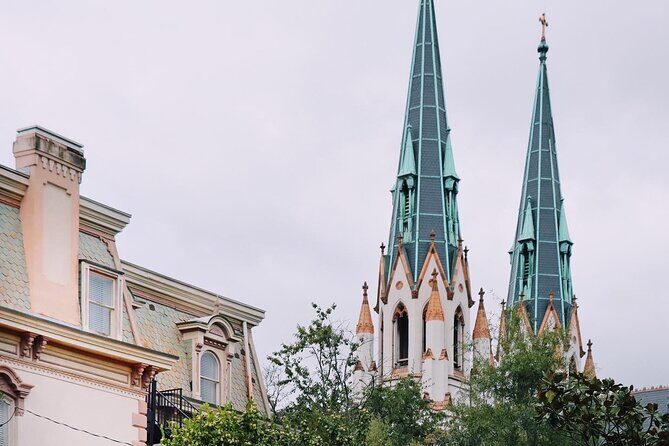
Savannah can feel like one long movie set—pretty streets, big houses, and squares everywhere. The challenge is knowing what you’re looking at and why it matters. This tour helps you connect the names, the buildings, and the events into a single timeline you can carry through the rest of your trip.
The big win is the structure: short segments, a steady walk, and story time at each location. You start in a central square, build context with the city’s founders and early residents, then move through the parts of the city tied to Native American history, slavery, immigration, and the Civil War. By the end, you’re not just tired—you feel oriented.
If you like history with human details (not lectures), the tone fits. From the reviews, Sarah is the kind of guide who answers follow-up questions and keeps things engaging even for kids and non-history folks. That matters when you’re trying to plan the rest of your itinerary.
Other walking history tours in Savannah



Chippewa Square: Oglethorpe and the Start of Savannah
You meet in Chippewa Square, and the tour kicks off with the founding story of Savannah and James Oglethorpe. This is a smart start because it gives you the “why” before you start chasing the “what.” You’ll understand how the city was planned and what early leadership looked like.
Chippewa Square is also the kind of place you’ll recognize later. It’s not just a stop—it’s a reference point. Once you know what Oglethorpe’s founding plan meant, the layout of the Historic District starts to make more sense as you walk.
The talk here is brief (about 10 minutes), which is good. You want enough background to stay interested, not so much that you’re exhausted before you’ve even reached the next square.
Juliette Gordon Low Birthplace: Girl Scouts Origins Without the Ticket Hassle
Next, you’ll stop near the Juliette Gordon Low Birthplace Museum. The emphasis is on the founding story of the Girl Scouts, with a quick explanation tied to the place itself. The timing is short—around 5 minutes—and that keeps the tour moving at a comfortable pace.
This stop is also a good example of how the tour handles “big-name” sites. You get context without spending time inside paid venues. If your schedule is tight, this is a big value point: you get the meaning of the site, then you can decide later if you want to return on your own.
A likely benefit for families: the Girl Scouts angle is usually easier to connect with than purely military or colonial detail. It’s a reminder that Savannah history isn’t only about wars and governments—it’s also about communities and civic life.
Wright Square and Tomochichi: The Native Story in the City’s Early Days
At Wright Square, the guide talks about Tomochichi and the local Native American tribe who helped the early colony succeed. This stop matters because it balances the typical “founders only” storytelling you often hear elsewhere.
You’ll spend about 10 minutes here. In that time, you’re meant to understand that the colony didn’t grow in a vacuum. The city’s early success depended on relationships and knowledge from local Native communities.
If you’re the type who likes your history to feel more complete, this is one of the stops that does the most work. The pacing here still stays light enough that it doesn’t feel heavy for the sake of heavy.
Owens-Thomas House and Slave Quarters: Slavery’s Impact Up Close
Then the tour moves beside the Owens-Thomas House and the Slave Quarters. At this stop, you’ll talk about how slavery impacted early Savannah history. The guide also uses the physical setting to keep the discussion grounded.
Time here is about 10 minutes. That’s not long, but it’s enough to connect slavery to the city’s growth—economically, socially, and in everyday life. It’s also a stop that can change how you look at the architecture. Big houses and grand streets start to feel less like decoration and more like part of a system.
A consideration: this is clearly not a “sit and sip” tour stop. If you prefer only upbeat topics, you may find the subject matter intense. Still, the tour keeps it measured, and the goal is understanding, not shock.
Other walking tours we've reviewed in Savannah






Colonial Park Cemetery: Victorian Life, Death, and Story Details
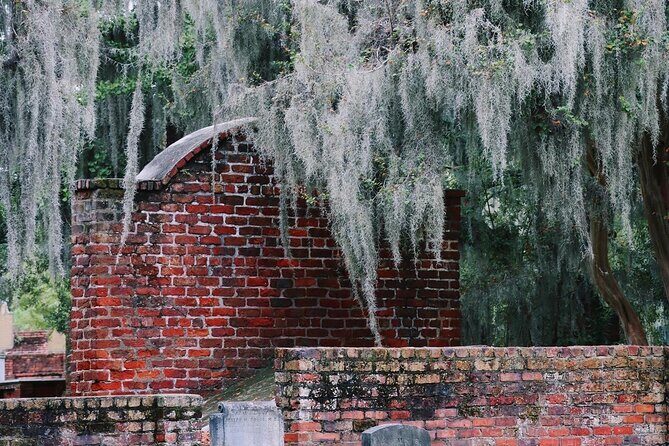
At Colonial Park Cemetery, you’re in for one of the most memorable segments. You’ll get a look at what life—and death—was like during the Victorian era in Savannah, with about 10 minutes on the topic.
From the way people describe the walk, this is where Sarah’s storytelling stands out. One review specifically mentioned learning the origin of the phrase dead ringer as part of her explanation in the cemetery area. Whether you go down that exact rabbit hole or not, it signals how the guide connects language, folklore, and place.
This stop also helps you “feel” Savannah. Squares and houses can teach dates. Cemeteries teach tone. They show you how people viewed family, memory, and status.
Practical note: cemeteries can be damp or cold if the weather turns. Wear shoes you can trust, especially since the tour is walking-based.
Cathedral of St. John the Baptist: Irish Influence in Savannah
Next comes the Cathedral of St. John the Baptist. Here, the tour focuses on how the large Irish community has influenced Savannah. You’ll spend about 10 minutes at this stop, and the commentary is geared toward connecting immigration and church life to the city’s identity.
This segment works well if you’ve been noticing the mix of architectural styles and want a reason behind it. Religion, community networks, and migration patterns all show up in a place like Savannah, and this stop gives you one of the clearest ways to see it.
If you’re traveling with people who think they dislike “church history,” this stop can still land. The topic is civic impact, not just doctrine.
Green-Meldrim House: Civil War Connections Without Overstating It
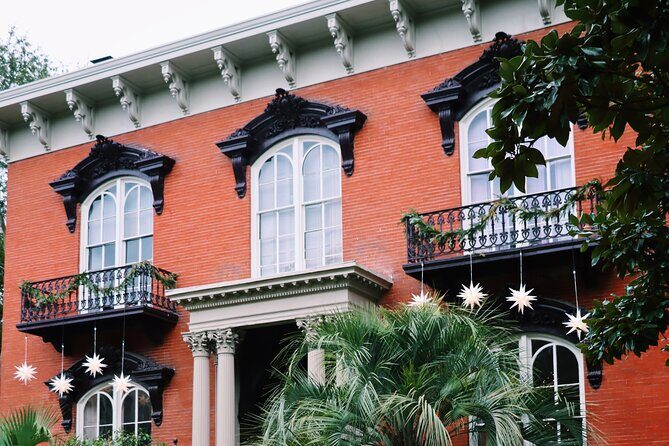
At Green-Meldrim House, you’ll cover Savannah’s role during the American Civil War. Time here is longer than a few of the earlier stops (about 15 minutes), which suggests the guide gives this topic enough space to make sense.
This stop is valuable because the Civil War is bigger than battles. It affected ports, trade, and how cities functioned. Savannah wasn’t isolated from the war; it was part of the story.
One thing I appreciate about this stop in the overall route: it doesn’t jump ahead too fast. By the time you reach the Civil War discussion, you’ve already built the earlier context—founding, community influence, and the darker parts of the city’s past—so the war topic clicks instead of feeling random.
Jones Street and Monterey Square: Beauty Meets Revolutionary Connections
Now you walk along Jones Street, commonly described as the most beautiful street in America. You’ll spend about 5 minutes here, so think of it as a quick visual breather and a chance to connect earlier stories to real street-level detail.
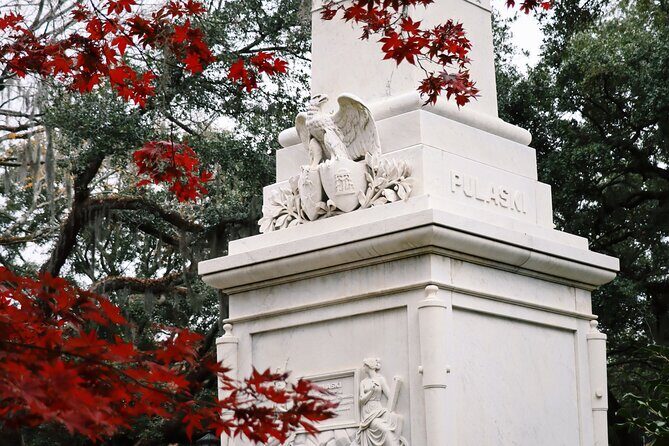
Then it’s on to Monterey Square. The tour discusses the Mercer-Williams House and also the role General Pulaski played in the Revolutionary War. Time here is about 10 minutes.
This pair of stops is a good reminder that Savannah history isn’t only grim. The city’s charm is real, and the guide helps you see that charm as part of a longer timeline. You’re still learning—but you’re also enjoying what you’re walking past.
If you love architecture, you’ll likely appreciate how Sarah frames buildings and streets as clues, not just backdrops for photos.
Forsyth Park Fountain: Ending With a Landmark You’ll Remember
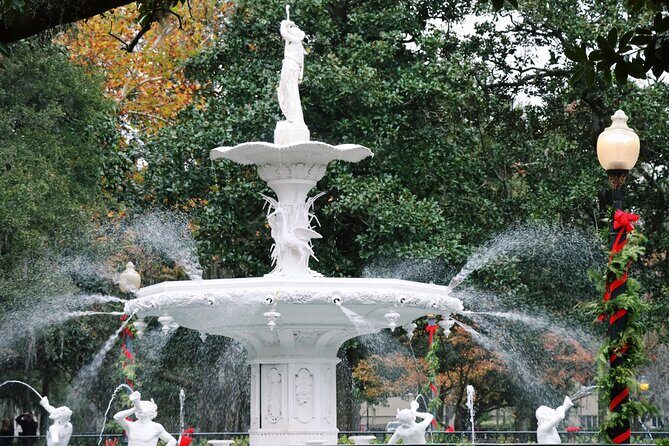
The tour finishes at Forsyth Park, after viewing the famous fountain. The final segment is about 5 minutes.
Forsyth Park is an excellent finish point because it gives you space after the walking and talking. It’s the kind of place you can linger, rest your feet, and decide what you want to do next without feeling rushed.
By the time you reach the fountain, the stories you heard along the route help you look at Savannah with different eyes. You’ll likely find yourself pointing out the squares and buildings you just learned—because now you know what each one contributed.
Price and Pace: Getting Value From $35
At $35 per person, you’re paying for orientation, story, and a guided route through major landmarks. For a tour that takes about 1 hour 30 minutes, this pricing can be solid value, especially because you’re not buying museum entry tickets along the way.
The other value piece is the format: small-group tour (max 15), so you don’t get swallowed by a crowd. Reviews repeatedly highlight that Sarah is engaging and flexible, and that guests felt they could ask questions. When a tour lets you pause for answers instead of marching you nonstop, the hour-and-a-half feels more like a conversation and less like a checklist.
If you’re deciding between a quick bus tour and a walking tour, this one tends to be the better fit for people who want to remember details. Bus tours can be efficient, but walking tours help your brain connect place to story.
Logistics That Actually Matter: Mobile Tickets and Real Walking Comfort
This tour uses a mobile ticket, and you get confirmation at booking. It’s offered in English, and it’s near public transportation, which helps if you don’t want to rely on parking.
You also want to plan for good weather. The experience requires it, and if weather causes cancellation, you’ll either get a different date or a full refund. That’s a normal setup for Savannah walking—so keep it in mind if you’re traveling in rainy seasons.
One practical detail that comes up in feedback: the walking includes uneven surfaces. Wear supportive shoes. Service animals are allowed, and most travelers can participate, so it’s generally approachable—but your feet will still do the work.
Finally, it’s a good idea to carry a little cash for a tip. The tour doesn’t talk about tips here in policy form, but it’s a common real-world expectation for guides.
Who Should Book This Tour (and Who Might Skip It)
This is a great choice if you’re:
- Visiting the Historic District for the first time and want a fast, understandable layout
- Interested in how Savannah connects founding, immigration, slavery, and the Civil War
- Traveling with mixed ages, including kids who need stories that don’t drag
- The type who likes stopping, asking questions, and learning as you walk
You might hesitate if you:
- Have limited mobility or prefer minimal walking (it’s still a walking-focused experience)
- Want only light, upbeat entertainment and would rather avoid slavery-related content
- Expect a museum-heavy day (this tour does not enter paid businesses or museums)
From the reviews, even people who didn’t consider themselves history buffs found it kept their attention. That suggests Sarah’s approach balances facts with plain language, plus enough humor and stories to keep it from feeling like homework.
Should You Book the History of Savannah Walking Tour?
If you want to understand Savannah instead of just sightseeing, book it. This tour earns its money by giving you context at the exact places where the story happened—squares, churches, landmark homes, and the cemetery—without wasting time on ticket lines. The small-group size and the guide’s interactive style make the 90-minute format feel worth your attention.
I’d especially recommend it early in your trip. When you learn the city’s timeline first, your later self-guided walks become easier and more satisfying. You’ll see the pattern, not just the pretty parts.
If your priorities are strictly museum interiors or long photo sessions with no narration, you may not love it. But if your goal is orientation plus smart storytelling, this is one of the best ways to start.
FAQ
How long is the walking tour?
The tour runs for about 1 hour 30 minutes.
What does the tour cost?
It costs $35.00 per person.
Is the tour offered in English?
Yes, the tour is offered in English.
Where does the tour start and end?
It starts at Chippewa Square and ends at Forsyth Park at the big fountain.
How many people are in a group?
The tour has a maximum of 15 travelers.
Do you enter museums or paid businesses?
No. The tour does not include entering paid businesses or museums.
Who is the guide?
The experience provider is Sarah Johnson, and she meets you at Chippewa Square.
Do I get a mobile ticket?
Yes, the tour includes a mobile ticket.
What if the weather is bad or I need to cancel?
The experience requires good weather. If it’s canceled due to poor weather, you’ll be offered a different date or a full refund. You can cancel for free up to 24 hours in advance for a full refund.