REVIEW · SAVANNAH
Behind the Plaques – 2 Hour Historical Walking Tour in Savannah
Book on Viator →Operated by House of Clayton · Bookable on Viator
Savannah’s plaques pack a punch. I love how quickly this 2-hour walk turns you into a square-spotter, with haunted-leaning stories and real landmarks like the Forest Gump bench. I also like that the route is built to help you understand what you’re seeing, not just pass it. One drawback: you’ll be outdoors and walking a fair distance, and it’s not a great match if heat and humidity hit hard.
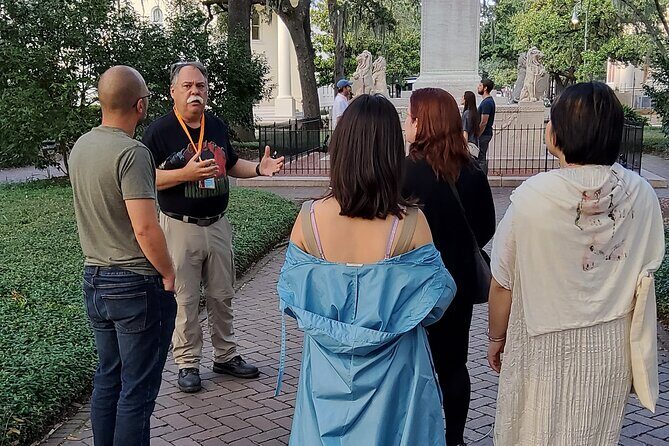
This is a $35 tour with a small group size (max 10), a mobile ticket, and a guide who keeps the pace friendly for questions. You’ll move square to square and get pointed toward names and details most visitors walk right past. It ends near Madison Square (about four blocks from where you started), so you’re not stuck feeling “done but trapped.”
In practice, the best part is the storytelling tone. From what I’ve seen described, guides like Brian or Bob can be approachable, and they’ll answer follow-ups instead of rushing you through. Still, the experience is set up for people with moderate stamina—if you can’t handle about two miles of walking, you’ll likely feel it.
In This Review
- Key highlights you’ll care about
- Chippewa Square: the orientation stop with the Forest Gump bench
- Wright Square: Tomo-Chi-Chi, the Court House, and the cemetery footprint
- Oglethorpe Square and why founders matter here
- Columbia Square: city gate clues and famous house names
- Colonial Park Cemetery: plaques with gravity and variety
- Lafayette Square: Mary Musgrove and the childhood-home vibe
- Madison Square: churches and standout house names
- Price and logistics: value for $35, but bring the right expectations
- How to make the most of this square-by-square walk
- Should you book Behind the Plaques in Savannah?
- FAQ
- How long is the Behind the Plaques walking tour?
- What does the tour cost?
- Where does the tour start and end?
- Is the tour in English, and do I need a print ticket?
- How many people are in the group?
- Do I need to pay for admission at the stops?
- Is the tour suitable if I can’t walk far?
- Is it okay to go in summer?
- What’s the cancellation policy?
Key highlights you’ll care about
- Built for orientation: you’ll learn the layout of downtown squares fast
- Story-first stops: alleged haunted cemeteries, houses, and parks add a memorable hook
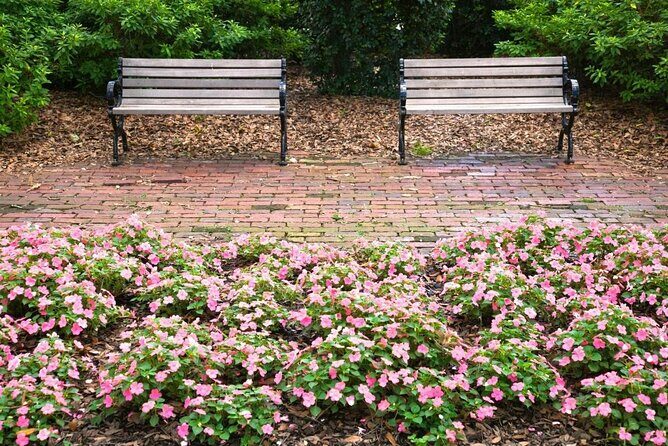
- Film + history crossover: see the bench made famous in the Forest Gump movie
- Plaque hunting: original city gate, town hall, and cemetery locations show up on the route
- Small-group feel: max 10 people, so you can ask questions without yelling
- Weather matters: summers can be a sweat test in Savannah
Chippewa Square: the orientation stop with the Forest Gump bench
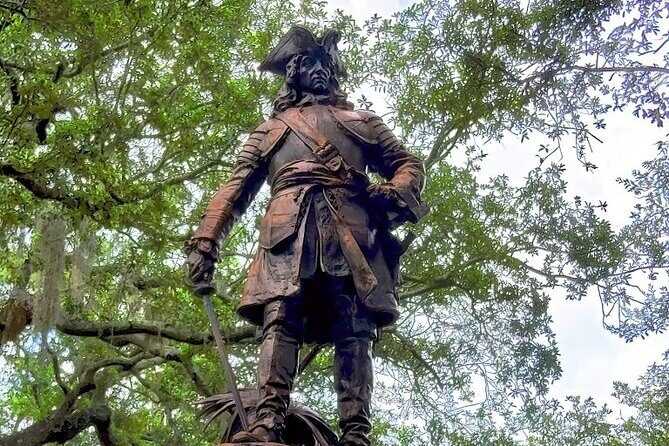
You start on the edge of Savannah’s most recognizable square life at Chippewa Square, a place named for the Battle of Chippewa during the War of 1812. Even before the stories get going, the square gives you a mental map: this is the basic rhythm of Savannah—open space, important buildings, and commemorations in plain view.
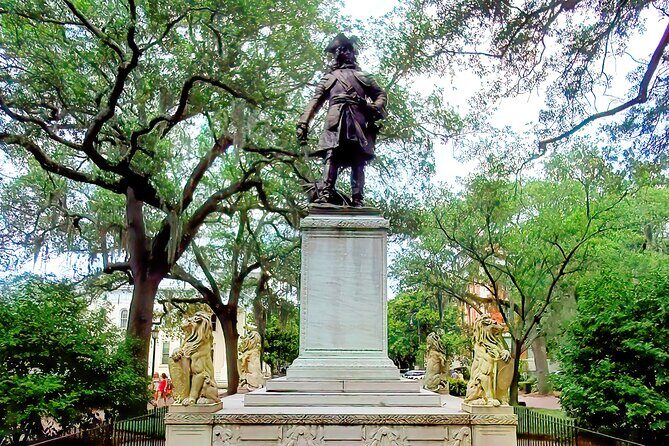
The tour’s approach here is smart. You’re not just learning names. You’re learning why those names sit where they do, and how that helps you read the historic district as you walk on your own later. On this stop, you’ll also hear about James Oglethorpe (including a monument to him), and you’ll be pointed toward several key landmarks you can actually locate again after the tour.
The crowd-pleaser is the Original Location of the Forest Gump bench. It’s the kind of detail that turns a “nice old square” into a “wait, I know that.” If you’re a movie fan, it’s a fun anchor. If you’re not, it still works as a guidepost for how Savannah uses pop culture and local lore in the same streetscape.
What to watch for: this stop is only about 20 minutes, so you’ll want to step in close when your guide is talking—then take a quick second to look up at the surrounding buildings and plaques on your own.
Other walking history tours in Savannah


Wright Square: Tomo-Chi-Chi, the Court House, and the cemetery footprint
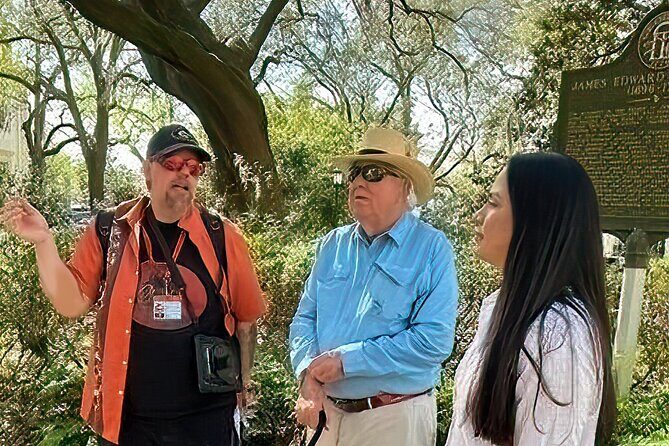
Next is Wright Square, named after James Wright, the last Royal Governor of Savannah. This stop adds a deeper historical layer without turning into a long lecture. You’ll hear about Tomo-Chi-Chi, chief of the Yamacraw people, and his role connected to Oglethorpe. The tour keeps the names tied to the geography, which is what makes it useful later when you’re reading plaques on your own.
You’ll also hear about William Gordon, President and Founder of the Central Georgia Railroad and the Central Georgia Railroad Bank, and how he connects to Juliette Gordon Low, founder of the Girl Scouts. It’s a good mix: the square isn’t only about one era or one type of story.
Then you get the stop detail that feels like a scavenger hunt: the original Town Hall, which is now the Court House. On the inside southwest building, your guide points out the location of Savannah’s original cemetery. That kind of “wait—this is where that was?” moment is exactly why a guided route helps. You can walk past a building and never guess what used to be there.
Best angle for you: come with curiosity. If you like stories that connect people to specific places, this is where the tour starts clicking.
Oglethorpe Square and why founders matter here
Oglethorpe Square is shorter—about 10 minutes—but it has a clear purpose. It’s named for James Oglethorpe, the founder of the colony of Georgia and the city of Savannah. This is one of those stops that works as a reset. After a couple of heavier details in the previous square, you get a clean “origin story” marker.
If you’ve never visited Savannah before, this is a helpful stepping stone. It gives you a named starting point so the surrounding plaques and building references make more sense as you move across downtown. If you’ve been before, you still benefit because it sharpens the context behind the founder-focused landmarks you’ll see again later.
Possible drawback: since it’s brief, you might wish for extra time to slow down and read surrounding details. Use it as a “mental label” stop, then lean on the next squares for more time at the ground level.
Columbia Square: city gate clues and famous house names
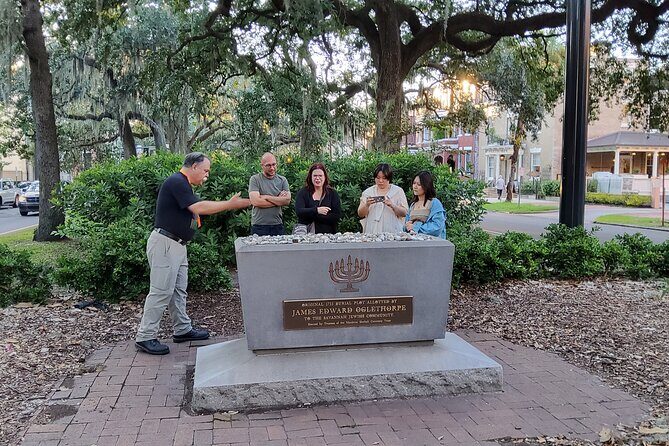
At Columbia Square (about 10 minutes), the tour switches into “find the hidden history” mode. The square’s name is tied to a nickname for the American Colonies. Then it gets practical: this is where you’ll hear about the Kehoe House, the Davenport House, and the first Savannah city gate.
You’ll also get a mention of the Wormsloe Fountain and the Historical Society House. Even if you don’t know the stories yet, hearing these names while you’re standing in place helps you store them correctly. Later, when you’re wandering on your own, you’ll recognize what you saw because the route has already taught your eyes how to frame it.
Why this stop is valuable: Savannah’s historic district can feel like “pretty squares and old buildings” until someone connects the dots. Columbia Square is the dot-connecting moment on this walk.
Quick tip: take one photo, then put your phone away for a minute. The value here is in the guide’s pointing and sequencing.
Colonial Park Cemetery: plaques with gravity and variety
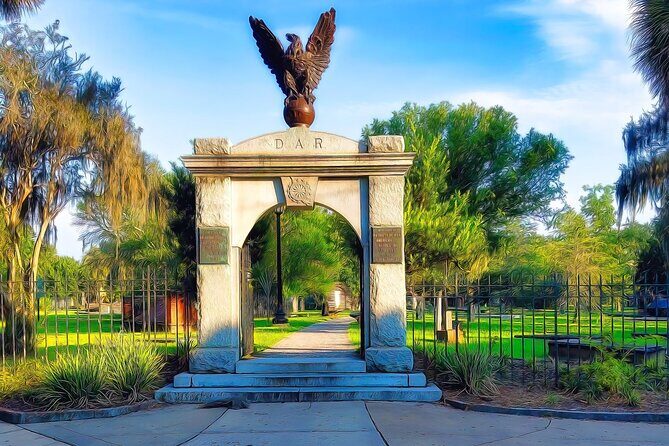
Colonial Park Cemetery is where the tone can shift. It’s about 20 minutes, and it covers the kind of range that makes cemetery stops more than scenic. You’ll hear about graves of a signer of the Declaration of Independence, Revolutionary War heroes, politicians, artists, and yellow fever victims.
That mix matters. Savannah’s story isn’t one smooth timeline. It has politics and art and epidemics, all sitting side by side in one physical place. A guided walk helps you avoid the “I’m just looking at headstones” trap by giving meaning to what you’re reading.
You also hear the “alleged haunted” angle here and across other stops, but cemetery grounds feel different than a film-location bench or a townhouse façade. If you’re in the mood for lighter spooky fun, this is still readable as part of Savannah’s lore. If you’re not, it may feel heavier than the movie references.
Consideration: because it’s a cemetery, expect a more respectful pace. Also, this is outdoor walking plus time standing still, so plan your shoes accordingly.
Other walking tours we've reviewed in Savannah





Lafayette Square: Mary Musgrove and the childhood-home vibe
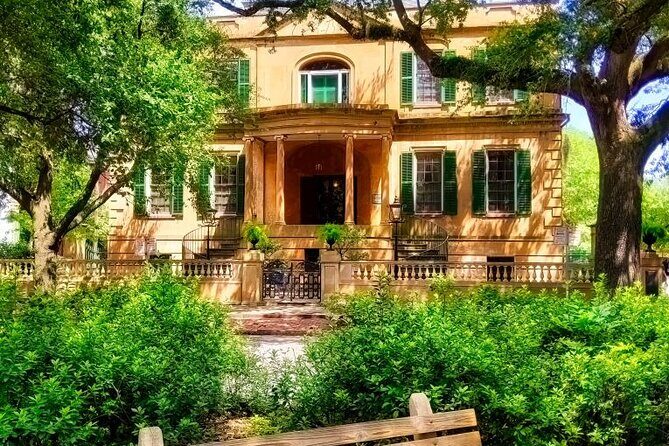
Next comes Lafayette Square, about 10 minutes. It’s named after General Marquis de Lafayette, and it includes references to the Flannery O’Conner childhood home and the Andrew Low house.
You’ll also hear about a plaque honoring Mary Musgrove, described as a translator for James Oglethorpe and Tomo-Chi-Chi. That single detail gives this stop extra weight. It’s not just names on buildings; it’s the idea that key people in Savannah’s early story weren’t only generals and governors.
This square also balances the experience. After cemetery gravity, it brings you back to a more familiar “pause and look around” setting. It’s where the tour can feel like a walk through a living museum—without needing any ticketed entry.
What you’ll get out of it: a stronger sense that Savannah’s plaques aren’t decorative. They’re narrative tools.
Madison Square: churches and standout house names
You finish at Madison Square, around 20 minutes. The name is tied to James Madison, the fourth President of the United States. You’ll also hear about a monument honoring Sergeant William Jasper, a Revolutionary War hero.
This is the square where you get a snapshot of how many key buildings cluster around the open space. Your guide points out St. John’s Episcopal Church, the Green-Meldrim House, the Sorrel-Weed House, and the Desoto Hotel.
Even if you’ve visited historic districts in other cities, Savannah’s square-to-building relationship is its own thing. Madison Square is a strong ending because it gives you a final set of landmarks you can actually point to when you compare neighborhoods later.
After the tour ends, you’ll be one square south of Chippewa Square, roughly four blocks from the start point. In plain terms: you’re not far from where you began, but you’ve covered a lot of meaning.
Price and logistics: value for $35, but bring the right expectations
At $35 per person for about 2 hours, this is priced like an orientation tour. You’re paying for two things: an organized route across multiple key squares, and a guide who ties plaques and landmarks into stories that stick.
The value gets better if you like to ask questions. The tour is designed for a small group—max 10—so you’re not usually stuck listening from the back of a crowd. If you enjoy learning how to locate the next highlight on your own, this route helps you build that skill fast.
You’re also getting a mobile ticket, and the stops are set up with free admission ticketed access (meaning you’re not paying extra at each viewpoint). GST is included in the price, and parking fees are not.
What to plan for: you should have moderate physical fitness and be able to walk at least about two miles. In summer, Savannah humidity and heat can make the route feel longer than the clock says. If you’re sensitive to hot weather, consider going in a cooler season.
How to make the most of this square-by-square walk
Here’s how you’ll get the best experience out of this tour style of sightseeing:
- Wear shoes you can stand in. You’ll spend real time at stops.
- Bring a small water bottle, especially outside cooler months.
- Come in with one or two questions about what you’re seeing. This tour is set up for Q and A.
- If you care about spooky lore, lean into it. The route includes alleged haunted stories tied to cemeteries, houses, and parks, so you’ll get those beats in context.
- If you care more about films and landmarks, focus on the Forest Gump bench moment early—then enjoy the rest as “where did that come from?” historical matching.
Also, the tour is in English, and confirmation happens at booking. Service animals are allowed. If weather is poor, the experience may be shifted or refunded.
Should you book Behind the Plaques in Savannah?
Book it if you want a fast, organized way to understand downtown Savannah. This is especially worth it for first-timers who want orientation, and for anyone who loves plaques, street-level stories, and the “names mean something” feeling.
Skip it or choose a different plan if you’re looking for long time inside buildings (the experience is square-based) or if walking two miles outdoors is tough for you. And if summer heat is an issue, this can be a rough fit.
If you want one strong reason to say yes: you’ll leave with a mental map of Savannah’s squares and a list of specific places you can revisit, not just a collection of photos.
FAQ
How long is the Behind the Plaques walking tour?
The tour runs about 2 hours.
What does the tour cost?
It costs $35.00 per person.
Where does the tour start and end?
It starts at Chippewa Square in Savannah and ends near Madison Square on Bull St. The tour ends one square south of Chippewa Square, about four blocks from where it starts.
Is the tour in English, and do I need a print ticket?
The tour is offered in English and you use a mobile ticket.
How many people are in the group?
The tour has a maximum of 10 travelers.
Do I need to pay for admission at the stops?
Admission tickets for the listed stops are free.
Is the tour suitable if I can’t walk far?
It’s not recommended for those unable to walk for at least two miles. It’s also listed for travelers with moderate physical fitness.
Is it okay to go in summer?
It’s not recommended in summers for people with difficulties with high humidity and hot temperatures.
What’s the cancellation policy?
You can cancel for a full refund up to 24 hours in advance. If you cancel less than 24 hours before the start time, it isn’t refunded. If it’s canceled due to poor weather, you’ll be offered another date or a full refund.