REVIEW · SAVANNAH
Private Walking Tour of Historic Savannah
Book on Viator →Operated by Explore Savannah · Bookable on Viator
A good Savannah walk starts with the right guide. This private tour threads classic historic squares with film and book stops, while letting you steer the stories toward topics like Civil War history, and it even builds in time for coffee or snacks along the way; one watch-out is that if your guide speaks very softly, you may miss details unless you prompt them early to project.
What I like most is the way the route stays tightly focused: you get the founding story, the geometry of the squares, and the big names behind Savannah’s growth, all in about 2 hours. You’ll also hit fun “only in Savannah” moments, like seeing the Forrest Gump bench scene spot and visiting the Mercer Williams House tied to Midnight in the Garden of Good & Evil.
The main drawback to keep in mind: it’s a walking tour with only about 1 mile total on foot, and most stops are quick, so if you want a long linger at every photo spot, you may feel a bit rushed. Still, the benches along the way help, and the pace is meant to keep you moving at a comfortable rhythm.
In This Review
- Key Things You’ll Notice on This Savannah Private Walk
- Wright Square to Forsyth Park: A Tight, Telling Route
- Stop by Stop: What Each Landmark Adds (and Where You Might Want More Time)
- 1) Wright Square and the Gordon Monument
- 2) Juliette Gordon Low Birthplace Museum (Look, Don’t Go In)
- 3) Independent Presbyterian Church on Bull St
- 4) Chippewa Square and the Forrest Gump Bench Spot
- 5) Sorrel Weed House Museum Area (Haunt Stories Included)
- 6) Madison Square and the Siege of Savannah
- 7) Green-Meldrim House: Gothic Architecture and Sherman’s Headquarters
- 8) The SCAD-Owned Savannah Volunteer Guard Building (A Pass-By with Context)
- 9) Gryphon Tea Room in the Shriner’s Building
- 10) Mercer Williams House Museum and Midnight in the Garden of Good & Evil
- 11) Armstrong House (Armstrong-Kessler): The Big Wow, Without the Tour
- 12) Forsyth Park and the Fountain Finishing Photo
- Why This Tour Works for First-Time Savannah Visitors
- The Guide Makes or Breaks It
- Practical Planning Tips (So You Enjoy the Walk More)
- Should You Book This Private Walking Tour?
- FAQ
- How long is the Private Walking Tour of Historic Savannah?
- Where does the tour start and end?
- Is this tour private?
- What language is the tour offered in?
- Does the tour run in bad weather?
- Are there admissions fees at the stops?
Key Things You’ll Notice on This Savannah Private Walk
- You can steer the topic toward Civil War history or whatever you’re curious about most
- Movie and literature connections add energy to the regular historic-square stories
- Most admissions are free, which makes the value feel real in your wallet
- Coffee/snack stops are built in, so you’re not stuck doing this on an empty stomach
- It ends at Forsyth Park Fountain, a photo finish that’s worth the walk
- The guide drives the experience, with guides like Rose and Crystal often singled out for pace and clarity
Wright Square to Forsyth Park: A Tight, Telling Route
This is the kind of Savannah tour that helps you get your bearings fast. You start in Wright Square at the north side in front of the Gordon Monument, and you finish at the fountain in Forsyth Park. Along the way, the route uses the city’s signature plan—squares, streets, and landmarks—to turn a scatter of buildings into one understandable story.
Because it’s private, you’re not stuck matching your pace to strangers. It’s also offered in English and runs rain or shine, so plan for weather and dress like you’re walking outdoors for a bit. The total time is about 2 hours, and the tour notes that it’s roughly 1 mile with benches available—small comfort, but it matters when you’re on your feet.
If you’re the type who likes history with a sense of place (not just dates), this format works well. You’ll hear why Savannah was set where it was, what the squares are meant to do, and how later events shaped the city. And if you like pop culture hooks, you’ll get those too—without losing the historic thread.
Other walking history tours in Savannah


Stop by Stop: What Each Landmark Adds (and Where You Might Want More Time)
1) Wright Square and the Gordon Monument
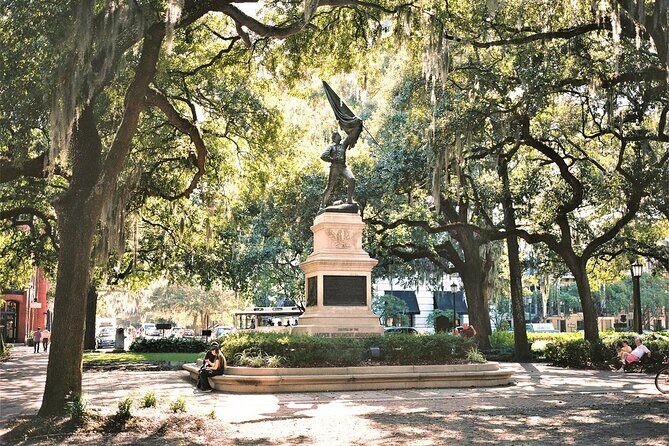
Your tour begins in the center of the north side of Wright Square, facing the Gordon Monument. This first stop sets the tone because it explains why Savannah looks like Savannah.
You’ll learn:
- how and why the city was established
- why General James Oglethorpe chose a 40-foot bluff for the colony
- how the layout of the squares works and why it was designed this way
There’s also a standout detail that makes the square feel personal: Tomochichi, the chief of the Yamacraw Indians, is buried under the Gordon Monument. You’ll hear why his place in Savannah matters.
One more practical note: the stop includes a fact about the Port of Savannah being the third largest port in the nation. It’s a nice shift from “old town” to how Savannah stays important today.
Time here is short—about 15 minutes—so I suggest using it to ask your first real question. If you’re curious about Civil War history, this is a good moment to signal that and let your guide shape the tour.
2) Juliette Gordon Low Birthplace Museum (Look, Don’t Go In)
Next you’ll admire the birthplace of Juliette Gordon Low, born October 31, 1860, and known as the founder of the Girl Scouts. The key detail is that you do not go into the home—you’ll see it from the outside.
That sounds limiting, but it’s actually smart for a 2-hour walking schedule. You still get the meaning of the place, and you keep momentum for the rest of the route. If you’re interested in women’s history in Savannah, this is a gentle, quick introduction that fits the flow.
3) Independent Presbyterian Church on Bull St
Then it’s on to the Independent Presbyterian Church. The church’s story is a lesson in how often early Savannah had to rebuild—first after destruction by fire, and later after a hurricane. Today it sits on the corner of Bull St and Oglethorpe Ave, with the current building dated to 1855.
Your guide will also point out which US President was married there in 1885, and why the steeple became famous. Even if you don’t catch every detail, the takeaway is that Savannah’s religious buildings often mirror the city’s tougher chapters.
This stop is about 5 minutes, so treat it like a “listen-and-look” moment, not a long stop.
Other historic district tours in Savannah






4) Chippewa Square and the Forrest Gump Bench Spot
Chippewa Square is where Savannah’s film-famous side steps into view. You’ll see where Forrest Gump sat with his box of chocolates while waiting for the bus.
One correction your guide will make is worth remembering: the monument in the center of the square is General James Oglethorpe, not Captain Morgan. The explanation is part of the fun because the resemblance is the kind of thing that makes people smile—and Savannah’s reputation for allowing to-go cups is a humorous local detail that shows your guide knows how to keep the mood light.
Expect about 10 minutes here. For the best photo, don’t just point your phone at the bench spot—scan for the wider square views too. The charm is in the setting.
5) Sorrel Weed House Museum Area (Haunt Stories Included)
The Sorrel Weed House is one of Savannah’s haunted homes, and your route takes you past it. While you won’t spend long here, you’ll get some of the eerie-building context that makes Savannah’s ghost reputation feel more grounded than hype.
Your guide will talk about:
- the Savannah gray brick wall around the courtyard
- the odd detail of fingerprints in the brick
- questions like where that brick came from
This stop is brief—about 2 minutes—so keep expectations realistic. Think of it as a spark. If you want a deeper dive into this house later, you’ll know what to look up because you’ll already have the right questions.
6) Madison Square and the Siege of Savannah
Madison Square is next, and it’s not just a pretty square. This location once held one of the bloodiest battles during the American Revolution: the Siege of Savannah.
This is one of those stops where history changes how you see the street. Instead of “a nice open space,” you start thinking about movements of troops, strategy, and survival. It’s a reminder that Savannah’s architecture is tied to conflict as well as celebration.
Time is about 10 minutes, which is usually enough to connect the dots and move on.
7) Green-Meldrim House: Gothic Architecture and Sherman’s Headquarters
If you like architecture, this is a major payoff stop. The Green-Meldrim House was completed in 1853 and is described as the finest example of Gothic architecture in the South. Your guide will share the cost at the time—$93,000, or about $3.2 million today—and note that it was the most expensive home in Savannah in the 1800s.
Then it gets historical weight: the home served as Headquarters for General Sherman during his March to the Sea when he occupied Savannah.
You’ll have about 10 minutes here. It’s enough time to notice details and hear the story, and it works even if you’re not an architecture nerd. The cost figure helps you understand scale, and Sherman’s connection helps you place the house inside national events.
8) The SCAD-Owned Savannah Volunteer Guard Building (A Pass-By with Context)
You’ll also pass the Savannah Volunteer Guard building, originally built and used for that purpose and now owned by SCAD. You don’t linger here, but it adds a modern layer: historic structures often survive by changing hands and adapting.
This kind of stop is useful because it keeps the tour from feeling like a museum with doors closed. It reminds you Savannah keeps evolving.
9) Gryphon Tea Room in the Shriner’s Building
Next you’ll run into one of the more charming “pause and breathe” stops: the Gryphon Tea Room, located inside what’s called the Shriner’s Building. Your guide will point out that inside is a museum in itself—once Solomon’s Apothecary—with original mahogany cabinetry and cubbies used to store medicines.
This is also one of the tour favorites for lunch, dinner, or simply relaxing with a cup of tea. Even if you don’t stop for a full meal, the presence of this stop makes the tour feel less like a sprint through trivia and more like a walk you can enjoy like a local.
10) Mercer Williams House Museum and Midnight in the Garden of Good & Evil
This is where Savannah’s most infamous literary connection comes in. The Mercer Williams House Museum is the one tied to Midnight in the Garden of Good & Evil by John Berendt.
You’ll hear the true story behind the book, centered on Jim Williams, who purchased the home in 1969, and the shooting of his assistant Danny in 1981. The book came out in 1993 and spent 216 weeks on the New York best seller list, and later the movie helped put Savannah’s tourism spotlight on the map.
One practical tip: the tour strongly recommends reading the book or at least watching the movie before you visit. Not because it’s required, but because you’ll recognize the story beats and get more meaning out of what you see.
Time here is about 10 minutes, and that’s enough to connect the house to the narrative without turning your walk into a full museum day.
11) Armstrong House (Armstrong-Kessler): The Big Wow, Without the Tour
Then comes the true “everyone stops and stares” exterior: the Armstrong House, also known as the Armstrong-Kessler house. It’s a private home today and not open for tours, but the tour includes a talk about its history and who lives in the house now.
This is the one home in town where people often pause mid-walk with a WOW reaction, and the tour emphasizes that scale: 26,000+ square feet.
Admission here is specifically noted as not included, which matters for planning. You still get the story and the sight, but you shouldn’t count on entering.
12) Forsyth Park and the Fountain Finishing Photo
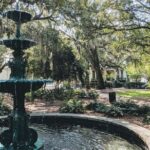
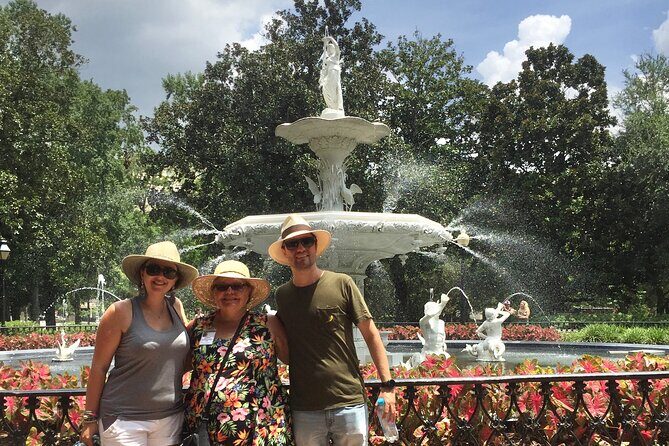
You end at Forsyth Park, where the tour’s walking loop pays off. Forsyth Park began in 1848 with 10 acres; today it covers 30 acres, and the tour describes it as the city’s central green space for young and old.
The crowning feature is the Forsyth Park Fountain. Here’s the detail that most visitors miss: the fountain was a catalog mail order from France, installed in 1858. That makes the end of the tour feel extra “Savannah”—a mix of old-world influence and local identity.
Time is about 5 minutes, so I recommend taking your final photos quickly but thoughtfully. If you want a perfect shot, pick a spot, take 2–3 photos, then let the last moments be about the atmosphere rather than chasing the best angle.
Why This Tour Works for First-Time Savannah Visitors
If it’s your first time in Savannah, this route does something valuable: it keeps you from getting lost in random sights. The city’s squares can feel like a maze until someone explains the plan behind them. Starting with Wright Square and then cycling through the rest gives you a framework you can reuse later on your own.
It also balances culture, history, and fun:
- You get real historical anchors (Oglethorpe, the Revolution, Sherman).
- You get guided pop-culture payoffs (Forrest Gump bench, Midnight in the Garden of Good & Evil).
- You get local flavor without turning everything into a food tour (coffee/snacks built in, plus the tea room stop).
That balance is why private tours like this can feel better than jumping between unrelated group tours.
The Guide Makes or Breaks It
Because this is a walking tour with lots of outdoor listening, sound matters. One downside that can happen is difficulty hearing if the guide speaks softly. If that’s you (or if you’re in the back of the group), ask your guide to project a little more early on. It takes ten seconds and can save your entire experience.
On the positive side, guides such as Rose and Crystal are highlighted for being fun, fast-paced in a good way, and covering what you actually want to know. If your guide is strong, the tour feels like spending time with a local storyteller who also understands timing.
Practical Planning Tips (So You Enjoy the Walk More)
A few things help you get the best version of this tour:
- Wear comfortable walking shoes. The tour notes about 1 mile of walking plus benches.
- Bring an umbrella. The tour operates rain or shine, and weather can shift fast.
- In summer, bring water. The tour notes Savannah can be hot and humid.
- Think about your priorities before you start. You can customize the tour to focus on a topic like Civil War history, which is a great way to personalize the time.
Also remember: this is a private tour, so your group only. That’s great for asking questions, but it’s still a set 2-hour window with short stops.
Should You Book This Private Walking Tour?
Yes, if you want a tight, well-structured introduction to Savannah that mixes historic squares with the city’s film and book fingerprints. It’s especially worth it when you like walking tours that explain the “why” behind the layout and landmarks, and when you want mostly free admissions without spending a whole day in museums.
Skip it or adjust expectations if you need very long stop times at each site. This is built for quick, clear storytelling across multiple highlights, not for slow browsing.
If you’re trying to see the best highlights without planning a full itinerary yourself, this tour is a strong match.
FAQ
How long is the Private Walking Tour of Historic Savannah?
The tour lasts about 2 hours.
Where does the tour start and end?
It starts at Wright Square in Savannah and ends at the Forsyth Park Fountain.
Is this tour private?
Yes. It’s a private experience, and only your group participates.
What language is the tour offered in?
The tour is offered in English.
Does the tour run in bad weather?
The tour operates rain or shine, and if it’s canceled due to severe weather, you’ll be offered a different date or a full refund.
Are there admissions fees at the stops?
Many stops are listed as free, but the Armstrong House admission is noted as not included.