REVIEW · SAVANNAH
Private Historic Savannah Tour in a Vintage Citroën
Book on Viator →Operated by Daniel Richardson · Bookable on Viator
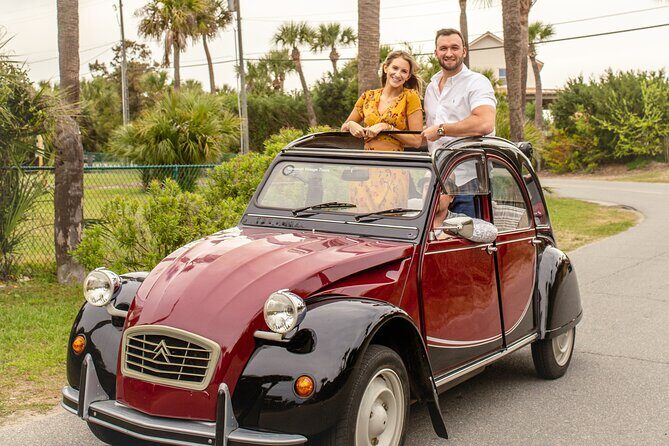
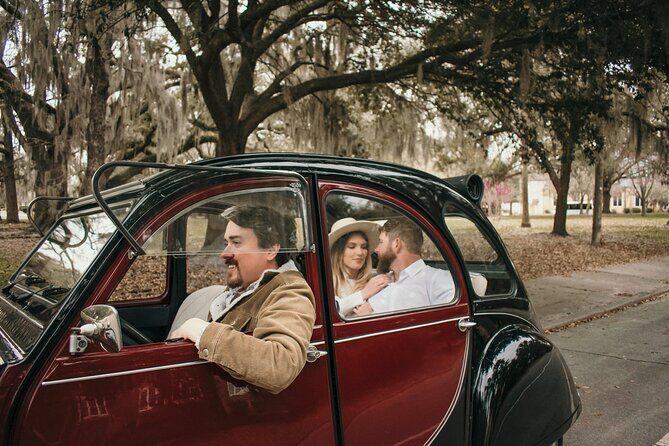
A vintage Citroën turns Savannah sightseeing into a show. You cruise the squares, parks, and historic streets of the Historic District in a classic open-air car, with a guide who can shape the route to what you care about. It’s built for first-time orientation and for people who hate being herded.
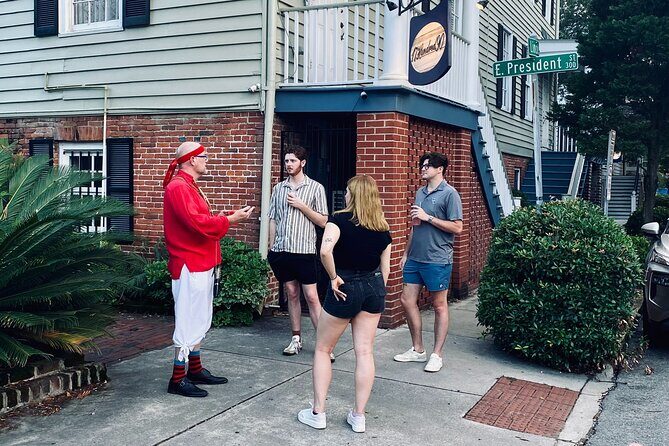
I especially like the private, personalized format. You’re not stuck with a one-size-fits-all script, and the driver-guide can answer questions as you go. Second, the convertible Citroën 2CV feel changes how you see the city—spires and balconies pop into view when you’re higher, more exposed, and moving slowly on purpose.
One thing to plan around: this experience needs good weather, and the open-top ride means sun and light wind matter. Also, pickup is limited to locations within the Historic District, with one noted exception.
In This Review
- Key Things You’ll Notice on This Citroën Tour
- Why a Vintage Citroën 2CV Feels Like the Right Savannah Style
- Pickup, Timing, and What 1.5 Hours Really Buys You
- Forsyth Park First: Fountain Stories and Square-Level Views
- Monterey Square and the Mercer Williams House Must-See Moment
- Savannah Squares and the City’s Original Plan
- Telfair Academy and Jepson Center: Art, Statues, and Built-Era Clues
- City Market and River Street in One Ride: Streets With Purpose
- Colonial Cemetery: Beautiful, Somber, and Historically Specific
- Lucas Theatre and Broughton Street: Shopping, But With Context
- Ending at the Old Armory Building: Turn the Tour Into Coffee and Lunch
- Should You Book This Private Citroën Tour?
- FAQ
- How many people is this tour for?
- How long is the vintage Citroën Savannah tour?
- Is pickup available?
- What language is the tour in?
- What stops will we see during the drive?
- What happens if the weather is poor?
Key Things You’ll Notice on This Citroën Tour
- Your route can be tailored to your interests, not locked to a fixed commentary track
- Forsyth Park gets the star treatment with both the famous spots and the lesser-known details
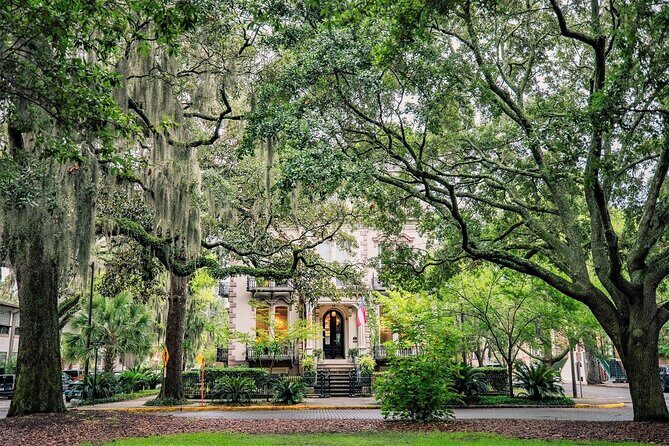
- Mercer Williams House on Monterey Square is treated like a must-see stop, not a drive-by
- Classic Savannah streets in one loop: City Market, River Street cobblestones, and major squares
- The mood shifts with Colonial Cemetery, so you get both beauty and the weight of the past
Why a Vintage Citroën 2CV Feels Like the Right Savannah Style
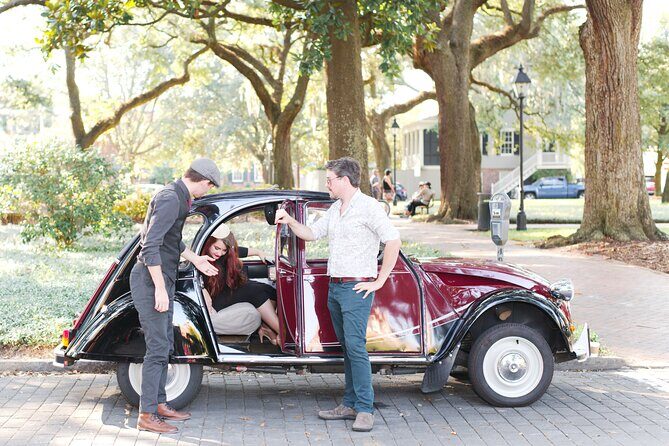
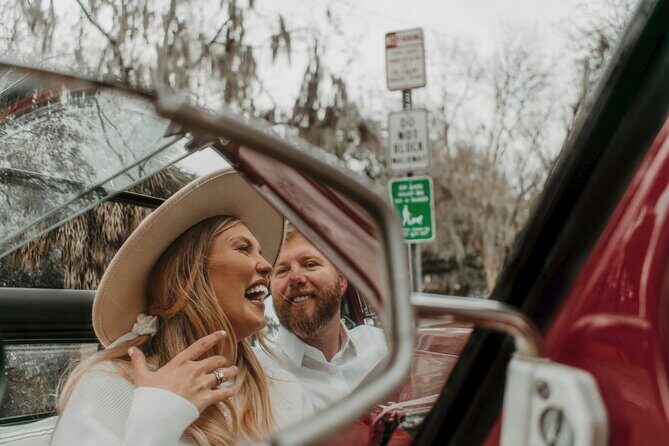
Savannah is a city you experience with your senses: sweeping views from street-level, little glimpses through trees, and that slow rhythm of walking between squares. This tour uses a classic vintage Citroën 2CV convertible to match that pace. You’re not sealed inside a vehicle. You’re out in the breeze, seeing architecture from a more human angle.
I also like the social side of it. An open-air vintage car invites reactions—other people smile, wave, and point. You get that small, cheerful “we’re doing something memorable” energy while still keeping the focus on history and real places.
And because it’s private, you can ask for stops that matter to you. Want more time on a specific square? Curious about a particular building along the route? The format is set up for questions, not just listening.
Other historic district tours in Savannah
Pickup, Timing, and What 1.5 Hours Really Buys You
The tour runs about 1 hour 30 minutes, which is a sweet spot in Savannah. Long enough to cover major landmarks in the Historic District, short enough that you’re not dragging the rest of your day around with you.
Pickup is offered at locations within the Historic District—hotels, Airbnbs, restaurants, or residences. There’s one exception: pickup is not available at the Westin on Hutchinson Island. So if you’re staying just outside the Historic District, you may need to confirm you’ll qualify for pickup or plan a nearby meeting point.
The tour uses a mobile ticket, and you’ll get confirmation at booking. It’s also truly private, meaning only your group rides. That matters here: Savannah is full of viewpoints, and being private makes it realistic to stop for photos without feeling rushed.
Forsyth Park First: Fountain Stories and Square-Level Views
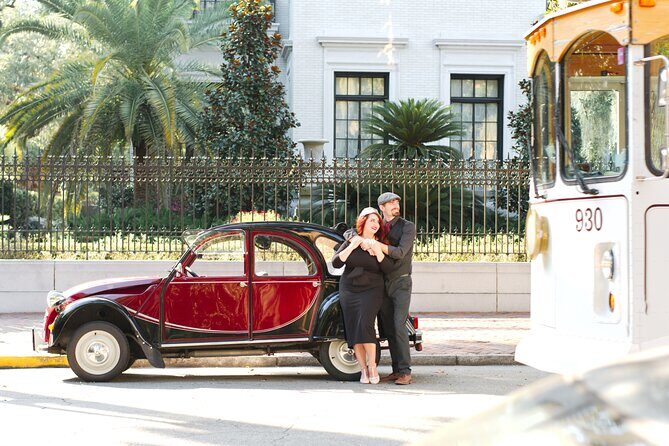
Your drive starts with a slow loop through some of Savannah’s most iconic parts of the Historic District, focusing on squares and picturesque parks. Then it homes in on Forsyth Park, one of the city’s best orientation anchors.
You’ll circle the park and learn its history, including commonly unknown facts about the fountain and the surrounding landmarks. That kind of detail is what turns a well-known postcard place into something you actually understand. Instead of just seeing a fountain, you start noticing why certain views exist, how the park fits the city’s design, and how the surroundings shaped daily life.
Practical tip: Forsyth Park is open and exposed. If you’re going in warm months, I’d plan for sun management and light layers for the wind that comes off open park space. The open-top car means you’ll feel both.
Monterey Square and the Mercer Williams House Must-See Moment
From Forsyth Park you head toward Monterey Square, right off the park area. This is where the tour spotlights the Mercer Williams house, connected to the famous book and film Midnight in the Garden of Good and Evil. In other words, this isn’t treated like a casual stop. It’s presented as a requirement if you want to understand the modern cultural face of Savannah.
What’s valuable isn’t just the name recognition. It’s the context: the way this house and the square connect to Savannah’s broader story—who mattered, what changed, and how certain places became symbols. Seeing the Mercer Williams house in the flow of the city (not as a random detour) helps it make sense fast.
Even if you’re not a “book-and-film” person, this stop works as a key moment in the neighborhood’s identity. It’s one of those places where the city’s reputation becomes physical.
Savannah Squares and the City’s Original Plan
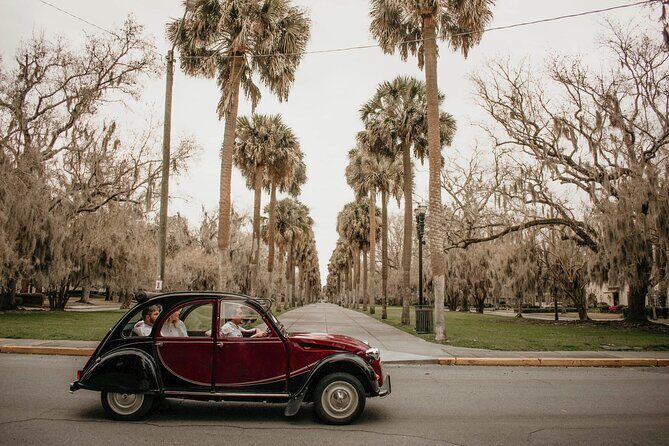
One of the tour’s central features is how it uses squares as a teaching tool. After Monterey Square, you’ll loop another major square in the Historic District and learn the history behind the city’s original plan.
That matters more than it sounds. Savannah’s squares aren’t random open spaces. They’re part of the city’s layout logic—designed to shape movement, views, and community life. When your guide explains that planning, suddenly the city feels organized instead of chaotic.
A possible drawback here: since you’re driving and looping, you might get the sense of a square without stepping into every corner. If you love to linger, you’ll want to use what you learn to decide where to walk next after the tour.
Other private and custom tours in Savannah




Telfair Academy and Jepson Center: Art, Statues, and Built-Era Clues

The drive includes Telfair Academy, one of Savannah’s most historic museums. You’ll also see the Jepson Center on the opposite corner, so you get both in one sweep of the street.
The tour focuses on the Telfair’s iconic entrance and classical statues. This is a useful stop if you like the look of old civic architecture—columns, stonework, and that formal, museum-at-the-end-of-the-view feeling. Even if you don’t plan to go inside, seeing the exterior as part of the city’s plan helps you connect buildings to the people who designed them.
One practical note: you’ll likely be viewing from the car at key points. So if you’re the kind of traveler who wants detailed time for photos, plan to circle back after the tour if you fall in love with the façade.
City Market and River Street in One Ride: Streets With Purpose

Next up is City Market, a place known for outdoor events, food options, and art galleries. The tour loops through it so you can see it all, not just the first storefront photo you spot when you arrive.
Then you transition to River Street, which the tour frames as iconic end to end. You’ll coast along the cobblestones in the vintage Citroën convertible, which is a fun way to experience the texture of the waterfront. Cobbles change your perception of speed. They make movement feel older, slower, and more tactile.
What I like about stacking these two stops is the contrast. City Market feels like commerce and craft in an open-air format. River Street feels like the city turning outward—waterfront trade, tours, and the bustle that comes from being at the edge of the map.
If you’re hoping to shop or snack during the ride, this is more of a “see and orient” style segment. Use it to decide where to walk later.
Colonial Cemetery: Beautiful, Somber, and Historically Specific
Savannah’s Colonial Cemetery is one of those places that people talk about because it’s stunning—but it’s also somber. The tour doesn’t just show the cemetery. It builds in a history lesson and notes what’s beside it.
You’ll learn about the cemetery’s history and see the historic building abutting it, including the historic Savannah police station and jail. That pairing is important. Cemeteries in a lot of cities are separated from the rest of life by time. Here, you feel a continuity between community, order, and the cost of living.
If you’re sensitive to heavy topics, just know this stop is designed to be reflective. It’s not a light photo break. It’s a “slow down and understand what you’re looking at” moment.
Lucas Theatre and Broughton Street: Shopping, But With Context
You’ll also pass the Lucas Theatre, historic and visually impressive enough on its own. The tour uses it as a jumping off point, then connects to the lively Broughton Street, Savannah’s main shopping thoroughfare.
This section works because your earlier square-and-plan lessons start clicking. Broughton Street isn’t just shopping. It’s the city in motion—where people move between landmarks and where that layered Savannah vibe shows up in everyday life.
Practical idea: if you want time later for browsing, keep note of what you like here during the drive. Then, after the tour ends, you can walk Broughton Street with a map in your head instead of a guess.
Ending at the Old Armory Building: Turn the Tour Into Coffee and Lunch
At the south end of Forsyth Park, the tour wraps up at the old Armory Building. This is a smart ending point because it’s close to a major landmark you already understand, so you can keep moving without feeling lost.
It’s also a convenient place to grab coffee, lunch, or even a bottle of wine, since it has shops and options. The tour flow is designed so you finish where you’re already set up for your next step: relaxing, eating, and deciding what you want to explore on foot.
If you’re traveling with another person, this ending spot is also ideal for matching tastes. One of you might want to shop. The other might want to walk back toward squares. You can split up briefly and meet again.
Should You Book This Private Citroën Tour?
If you want a fast, high-impact introduction to Historic Savannah with a guide named Daniel Richardson, this is a strong choice. The private format, the classic open-air Citroën experience, and the way the route hits both major sights and city logic (squares, planning, architecture cues) make it good value—especially since it’s priced per group up to two for about 1.5 hours.
Book it early in your trip if you can. You’ll leave with a better sense of where things are, why they’re there, and what to revisit on your own.
Skip it only if you strongly prefer a fully walking tour with lots of stop-and-go time at each individual building, since this is a drive-and-view loop built for orientation and context.
FAQ
How many people is this tour for?
It’s a private tour/activity for your group only, priced per group up to 2 people.
How long is the vintage Citroën Savannah tour?
It runs about 1 hour 30 minutes.
Is pickup available?
Yes. Pickup is available within the Savannah Historic District (hotel, Airbnb, restaurant, or residence), but pickup isn’t available at the Westin Hotel on Hutchinson Island.
What language is the tour in?
The tour is offered in English.
What stops will we see during the drive?
You’ll see key areas such as Forsyth Park, Monterey Square and the Mercer Williams house, major squares, Telfair Academy and the Jepson Center, City Market, River Street, Colonial Cemetery (with nearby historic buildings), Lucas Theatre, Broughton Street, and finish near the old Armory Building.
What happens if the weather is poor?
The experience requires good weather. If it’s canceled due to poor weather, you’ll be offered a different date or a full refund.