REVIEW · SAVANNAH
Savannah Historic District Tour by The Wandering Historians
Book on Viator →Operated by Bonaventure, Historic Savannah, Low Country & Private with Shannon Scott Tours · Bookable on Viator
Savannah’s squares tell stories fast. This guided walk strings together the city’s founding era, major monuments, and standout architecture in about two hours. You’ll get clear context for why these places look the way they do, and how power, faith, and commerce shaped the city.
I love that it’s built for real walking. You’re not just standing in front of plaques; you’re moving square to square with a guide who keeps the pace right, and you can toss questions into the mix. One drawback to plan for: if you mainly want today’s Savannah vibe and current-day neighborhoods, this tour stays focused on the past.
In This Review
- Key things you should know before you go
- Why Savannah’s squares work so well in a 2-hour walk
- Meeting at Monterey Square and learning Savannah’s “square logic”
- Johnson Square: where Savannah’s founding shows up in plain sight
- Classic Greek Revival and the Church of England angle
- Wright Square to Bull Street: the city’s main artery of foot traffic
- Trading homes, steeples, and schools: the architectural sweep between squares
- Practical tip
- Chippewa Square and the Savannah Theater area: Colonial to Victorian in one breath
- The boarding house detail
- Coffee, pubs, and a Moorish stable: pauses that keep the story moving
- Madison Square and the SCAD blocks: architecture plus living study spaces
- Why this section feels worth it
- Monterey Square, Pullaski Monument, and the Temple Mickve Israel moment
- Mercer House and the Good & Evil story
- William Jasper, Poetter Hall, and Gryphon Tea Room: faith, service, and study
- The rowhouse street that feels like a time capsule
- Should you book this Savannah Historic District tour?
- FAQ
- How long is the Savannah Historic District Tour?
- What does the tour cost?
- Where does the tour start and end?
- Is the tour offered in English?
- Will I need to download a ticket?
- How big is the group?
- Does the tour depend on weather?
- What is the cancellation window?
Key things you should know before you go
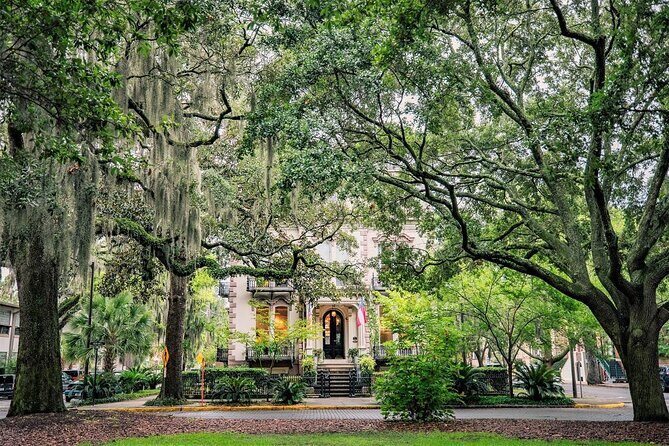
- Two hours, mostly on your feet: expect a lot of walking and minimal sitting.
- Small group feel: it can be under 30, and some groups run as small as seven.
- Architecture is the star: you’ll hit Greek Revival, Gothic details, cast iron, and Moorish-inspired design.
- Outside views when buildings are ticketed: several highlights are talked through from the street.
- Coffee/bathroom timing can work: there’s a planned stop at a longtime coffee spot if time allows.
- Guides can bring personality: I’ve seen names like Ken, Paschal/Pasquale, and Janine mentioned for pacing and storytelling.
Why Savannah’s squares work so well in a 2-hour walk
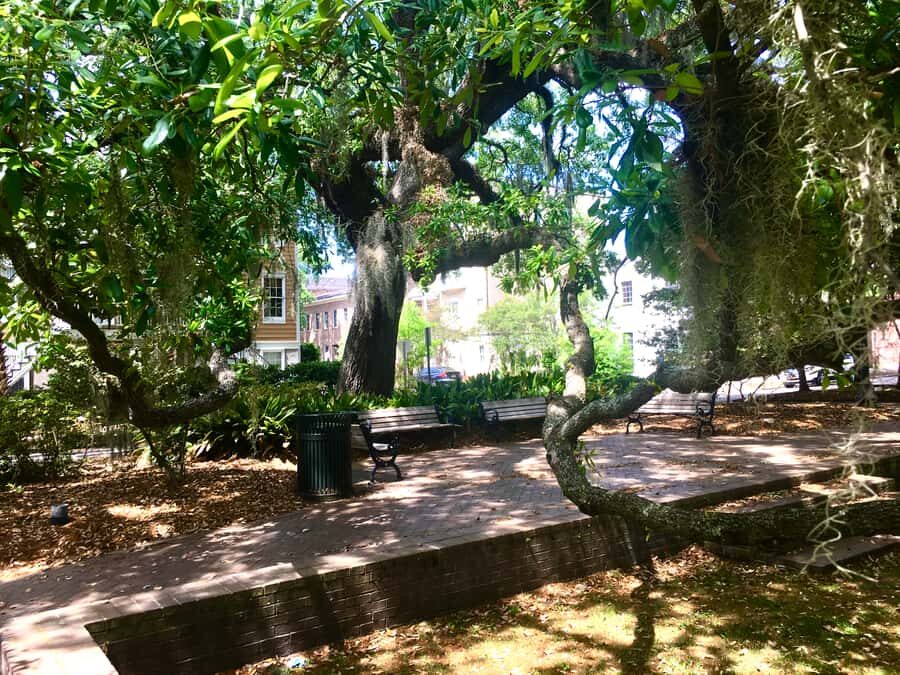
Savannah was planned in squares, and that design makes your sightseeing simpler than you might expect. Instead of chasing random streets, you follow a route where every turn explains a piece of the city’s logic—who lived where, where authority sat, where people gathered, and how different styles got layered over time.
The second reason this format works: your guide helps you read what you’re seeing. You learn how church steeples, civic buildings, and even “ordinary” rowhouses fit into a bigger story. The result is that the city starts to feel like a single living diagram, not a list of stops.
And yes, it’s active. Reviews highlight that you’ll be walking most of the time, so wear comfortable shoes and keep water handy. If you’re hoping for a bus tour with lots of sitting, this isn’t that.
Other walking history tours in Savannah



Meeting at Monterey Square and learning Savannah’s “square logic”
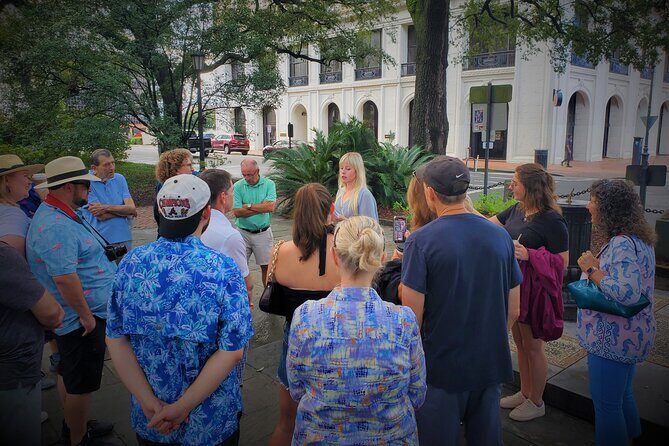
You start and finish at Monterey Square, 11 W Gordon St. That matters because the route is meant to loop smoothly along the Bull Street corridor of squares, with no long gaps between sights.
One smart part of the layout: many highlights are close enough that you can keep momentum without feeling like you’re sprinting. The tour is structured so you’re usually within about a 10–15 minute walk of where you started each chunk.
If you’re visiting for the first time, this is the kind of walk that helps you prioritize the rest of your trip. After a couple hours, you’ll know which areas you want to revisit for photos, extra walking, or a museum stop later.
Johnson Square: where Savannah’s founding shows up in plain sight
Johnson Square (often called Bank Square by locals) is where the city’s story starts to feel tangible. Here, you’re in Savannah’s original big moment: the colony was first organized in 1733, and the square quickly became central to culture and commerce. It’s not just scenic. It’s civic gravity.
Your guide ties multiple threads to the same spot. City Hall anchors the modern civic presence, while burial connections and longstanding religious presence show how layered the community has been from the beginning. Even if you don’t memorize dates, you’ll come away understanding why this square is treated like the city’s beating heart.
You’ll also look at the former City Exchange site—where government influence flows today through a striking gold dome. That “gold dome” detail is the kind of thing you’d miss if you were walking solo. On a guided route, it becomes a landmark with meaning, not just a shiny object.
Classic Greek Revival and the Church of England angle
In the southeast corner of Johnson Square, the Church of England location connects you to a long-running worship tradition. The building style here is described as a masterwork of Classic Greek Revival, so you get a chance to “see the language” of architecture rather than treating the square like a postcard.
Wright Square to Bull Street: the city’s main artery of foot traffic
Wright Square is one of Savannah’s original squares from the founding period, which means it holds deep roots. You’ll hear how it once included the first burying ground, courthouse, and jail, plus later burial associations connected to Tomochichi—the Indian king tied to Savannah’s founding era. That mix is a reminder that early civic life was not neatly separated into “nice” and “serious.” It all lived together.
From there, the tour guides you along the Bull Street axis—the central spine of the square system. This is where you understand why Savannah feels walkable even today. Shops, cafes, churches, and architectural variety line up along the route, so the city’s plan becomes your navigation tool.
That’s one reason I like this tour for orientation. You’re not just learning what happened. You’re learning how the city still moves because the plan is still there.
Other historic district tours in Savannah






Trading homes, steeples, and schools: the architectural sweep between squares
This middle stretch is where you really start to notice style changes—and why those changes matter.
You may pause at a home built in the early 1800s by William Jay (not a random residential stop). The guide connects it to a larger American story, including figures tied to the Gordon family and Juliette Low, associated with the Girl Scouts in the United States. The point isn’t trivia for trivia’s sake; it’s showing how wealth, immigration, and civic life shaped who lived where.
Then come the church and steeple highlights. You’ll see a religious monument with a 119-foot cast iron steeple, described as the highest point in the city. It was built in 1819 by John Holden Greene, and it’s tied to Scottish heritage. This is also a place connected to Woodrow Wilson’s marriage in the courtyard, which helps you grasp why Savannah’s faith architecture shows up in national memory, not just local lore.
You’ll also encounter an elite school building for boys—The Chatham Boys Academy—with sculptural work attributed to John Walz, a name linked to cemetery sculpting at Gettysburg and Bonaventure. Even though the building’s purpose changed, the way it’s decorated still reflects the values of the era that created it.
Practical tip
This part of the walk is often the most photogenic, but also the most “read the details” portion. Slow down for a minute when your guide pauses, and you’ll capture more than just wide street shots.
Chippewa Square and the Savannah Theater area: Colonial to Victorian in one breath
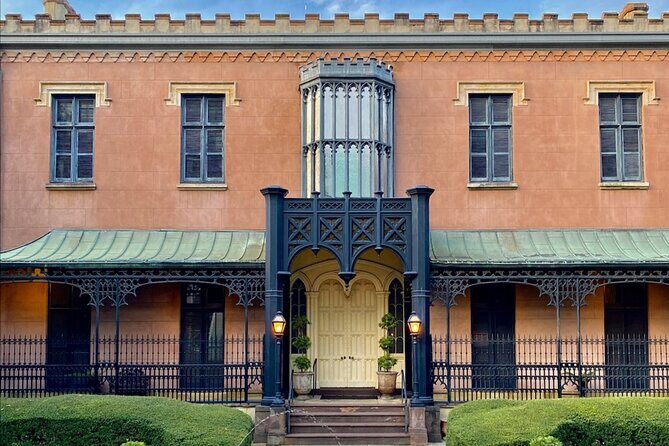
Chippewa Square is one of those places where you can feel the city shifting across time. The architecture mix here includes Colonial and Victorian rowhouses, plus major churches and inns around the square. There’s also a monument to Georgia’s founder, James Edward Oglethorpe, designed by Daniel Chester French, the sculptor best known for major American memorial work.
It’s also a place with cultural gravity. Your walk may include the Savannah Theater area, described as America’s oldest continually operating theater even with changes from multiple fires. The guide connects the theater to notable performances and lectures, including references to Oscar Wilde and the Booth family. Whether you care about the names or not, you’ll get a sense of Savannah as a city that entertained itself—and made culture part of daily life.
The boarding house detail
You’ll also hear about Savannah’s first boarding house, run by an industrious woman, still remembered for its beauty. It’s a reminder that “history” isn’t only big political events. It can be about everyday hospitality and the people who supported travelers and locals alike.
Coffee, pubs, and a Moorish stable: pauses that keep the story moving
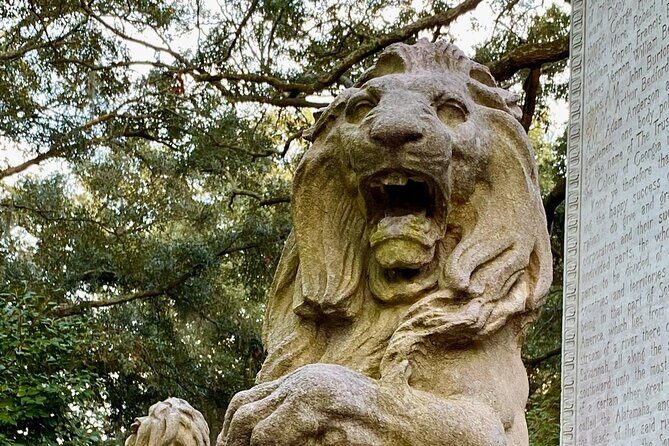
Savannah breaks your attention span with scenery. The tour helps you stay focused by adding short stops that reset your brain.
One stop can include The Gallery Espresso, Savannah’s long-running coffeehouse tradition, and it’s sometimes timed so you can grab a quick coffee or use the bathroom if you need it.
From there, the route leans into an English-town look with a pub facade that features a London phonebooth outside. The guide explains how the business started and why it stayed popular. It’s a good moment to think about Savannah’s identity as something built from outside influences, not only local roots.
Next is Artillery Bar, a building originally described as a Victorian stable for Arabian horses. It’s Moorish-inspired, with rounded glass corners and a terra-cotta facade. Here, the guide connects it to Henry Ford’s early showroom opening in 1905, then brings you back to the modern-day use as a cocktail bar. It’s a fun pattern: the city reuses dramatic structures instead of demolishing them.
Madison Square and the SCAD blocks: architecture plus living study spaces
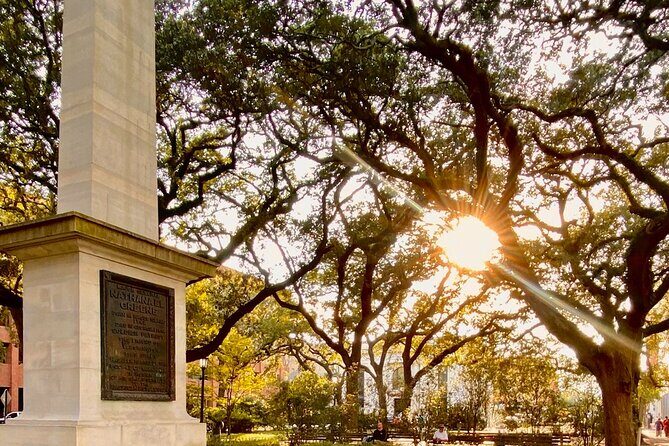
Madison Square is where you get a dense concentration of “stop and stare” architecture. The route includes book and tea spots nearby, plus churches with major Gothic Revival and Greek Revival examples that the guide frames as among the finest in America.
Another key detail: you’ll hear how the Savannah College of Art & Design fits into this picture, including a reference to the college’s founding inside The Chatham Artillery around 1976. Even though your tour remains focused on history, this connection helps you understand how preservation and education can share the same buildings.
Your guide also stops at homes that you view from the outside. One example is the Sorrel-Weed-style story angle tied to prominent families and an American paranormal connection discussed on the tour route. Even if you’re not chasing spooky stories, this stop shows how Savannah’s narratives evolve. People return for history, then stay for legend.
Why this section feels worth it
The value here isn’t just sight-seeing. It’s the sense that Savannah is still used, not only admired. Buildings keep getting new purposes, but their bones remain.
Monterey Square, Pullaski Monument, and the Temple Mickve Israel moment
Monterey Square is quiet and European-feeling by local reputation, and it’s a great place to catch your breath for a minute. You’ll hear how the square connects to Count Casimir Pulaski, including a burial laid out here in 1779. The tour also points to other Civil War connections, plus names tied to preservation efforts.
A major part of why this section works: it links physical space to identity. The guide shares details about Temple Mickve Israel, including that it includes very old Torah heritage, plus an unusual fact about how the oldest congregation in Savannah still practices within a Christian-styled building. You’ll spend time around the area without needing to pay to enter.
Then the walk goes to the Pulaski Monument, described as a standout monument for Pulaski supporters, designed by Latvian sculptor R.E. Launitz. You’ll also hear about controversy and debate around the remains linked to the monument. That mystery element makes the stop feel more than ceremonial.
Mercer House and the Good & Evil story
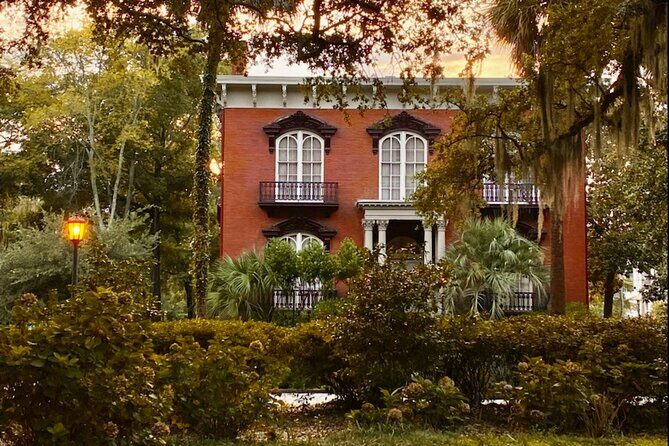
The tour may also include the Mercer House area—famous from Midnight in the Garden of Good & Evil. In this experience, you don’t go inside. You spend quality time at the property and connect it to broader Savannah character.
William Jasper, Poetter Hall, and Gryphon Tea Room: faith, service, and study
From monuments to institutions, the tour keeps moving through distinct “Savanah themes.”
William Jasper’s monument highlights heroism from the Revolutionary War era, tied to the defense of Savannah. The point of this stop is how Savannah remembers individual sacrifice—again, it’s not only about rulers and governors.
Poetter Hall connects to the Chatham Artillery story and the idea of local service groups. The route then links that to SCAD’s founding by two educators in 1976 and how the school restored more than 100 buildings in Savannah over time. Even if you don’t have SCAD on your itinerary, this is helpful context for why Savannah looks the way it does today.
Next is the Gryphon Tea Room, located inside a massive Roman-styled Scottish Rite Masonic Temple and now owned by SCAD. The guide frames it as Victorian-authentic, and you’ll hear how it ties to older interior origins referenced as part of the story. If you love “old feeling in a functional place,” this is a good stop.
The rowhouse street that feels like a time capsule
After monuments and buildings, the tour slows down into street-level charm.
You’ll see a residential street described as having original brick and asphalt brick streets and commonly called the most beautiful street in Savannah. The guide explains how the east-to-west Jones Street corridor shows exemplary rowhouses on one block, with homes ranging from 1847 into later styles.
This is the part I recommend if you’re hungry to see how Savannah actually lived. It’s easy to get caught in the big squares, but the street gives you scale—how neighbors shared walls, how daily life fit into narrow space, and how preservation changed the skyline without flattening the character.
Should you book this Savannah Historic District tour?
Book it if you want a fast orientation to Savannah’s square system and architectural styles, with a guide who makes monuments and buildings feel like they connect to real people and real events. It’s also a strong choice if you like asking questions, since the guide keeps time and pace tight and encourages participation.
Skip it if your main goal is today’s Savannah—bars, restaurants, modern neighborhoods, and what locals do on a random Tuesday. This tour stays focused on the past, and that’s a feature, not a bug.
If you do book: plan for good shoes, expect a walking day, and come with one or two topics you care about—church architecture, early town planning, or Civil War-era stories. Your guide will likely help you connect those dots quickly.
FAQ
How long is the Savannah Historic District Tour?
It runs for about 2 hours.
What does the tour cost?
The price is $36.50 per person.
Where does the tour start and end?
It starts and ends at Monterey Square, 11 W Gordon St, Savannah, GA 31401.
Is the tour offered in English?
Yes, it’s offered in English.
Will I need to download a ticket?
You’ll receive a mobile ticket.
How big is the group?
The tour has a maximum of 30 travelers.
Does the tour depend on weather?
Yes. It requires good weather, and if it’s canceled due to poor weather, you’ll be offered another date or a full refund.
What is the cancellation window?
You can cancel for free up to 24 hours in advance for a full refund. If you cancel less than 24 hours before the start time, the amount paid is not refunded.