REVIEW · SAVANNAH
Historic Savannah Self-Guided Walking Audio Tour
Book on Viator →Operated by Action Day Trips · Bookable on Viator
Savannah gets easier when the audio tells you where to look. This self-guided walk strings together 50+ location-triggered stories across classic squares and landmark buildings, and it’s built for offline use so you can keep going even when your signal drops. The big tradeoff: it’s over 5 miles, so plan for weather and comfortable walking shoes, and know the app only works properly along the mapped route.
I like that you can start, pause, and move at your own pace, which is perfect when you want to linger at a church entrance or detour for a snack. I also like the fact that most stops are free to view, so your $14.99 mainly buys the narration and the route—not a pile of separate tickets. Just be ready to download the tour ahead of time on good connectivity, because you need that initial setup before the walk.
In This Review
- Key things I think you’ll notice right away
- Why this $14.99 Savannah audio tour works better than you’d think
- Price and what you actually get for your ticket
- Before you set off: download right, then trust the audio
- How to walk the route without missing stories
- The squares-and-architecture stretch: from MLK Visitor Center to Johnson and Wright Squares
- Savannah MLK Visitor Information Center
- First African Baptist Church
- Reynolds Square (John Wesley)
- Olde Pink House
- Johnson Square (James Oglethorpe and Christ Church Episcopal nearby)
- Wright Square (William Washington Gordon and Mercer-Williams House sightline)
- House museums and landmarks: Owens-Thomas, Chippewa Square, and the theatre era
- Owens-Thomas House & Slave Quarters (note on admission)
- Chippewa Square (architectural styles)
- Independent Presbyterian Church of Savannah (Greek Revival facade)
- Historic Savannah Theatre (note on admission)
- Harper Fowlkes House (1842, Greek Revival style, gardens)
- From St. John the Baptist to the Sorrel-Weed House and literary Savannah
- Cathedral of St. John the Baptist (French Gothic and stained glass)
- Old Sorrel Weed House Museum & Tours (and the paranormal note)
- Flannery O’Connor Childhood Home Museum
- Massie Heritage Center
- Forsyth Park to the Civil Rights Museum and the riverfront finish
- Forsyth Park (30 acres, fountain, gardens)
- Mercer-Williams House Museum (Italianate and Midnight in the Garden of Good and Evil)
- Ralph Mark Gilbert Civil Rights Museum
- The Waving Girl Statue
- The Pirates’ House (maritime lore and a dining option)
- Davenport House Museum (1820 Federal-style home)
- How to make the walk comfortable (and avoid app hiccups)
- Who this self-guided Savannah audio walk is best for
- Should you book this Historic Savannah Self-Guided Walking Audio Tour?
- FAQ
- How long does the Historic Savannah self-guided walking audio tour take?
- Where does the tour start and end?
- Is the tour self-guided, or do I meet someone in person?
- Does it work without cellular or Wi‑Fi?
- Are the audio stories in English?
- Is admission included for every stop?
- What devices do I need for the tour to work well?
Key things I think you’ll notice right away
- Hands-free audio by location: the stories play based on where you are, so you don’t have to tap every few seconds.
- Offline maps after download: you’ll still have the route and audio cues when cellular service is weak.
- 21 stops in about 1–2 hours: it’s a brisk, story-packed loop designed for steady walking.
- Most sites are free, a couple are not: Owens-Thomas House & Slave Quarters and the Historic Savannah Theatre are listed as admission not included.
- A lifetime, no-expiry ticket: you can reuse the tour on future trips instead of treating it as a one-and-done expense.
- A mapped route matters: you’ll get the right story only when you follow the route inside the app.
Why this $14.99 Savannah audio tour works better than you’d think
This isn’t a “read a sign and move on” kind of walk. It’s a guided-feeling route you control. You start at 301 Martin Luther King Jr Blvd, and the tour takes you through the city’s most photographed corners—squares, churches, historic homes, and museums—using audio cues that tell you what you’re looking at.
For $14.99, the value comes from two things: volume and flexibility. You’re not just paying for a few facts. You’re buying access to 50+ audio stories plus offline maps, and you can replay the experience later. That makes it a good budget alternative when you don’t want to commit to a set-group tour time.
If you hate feeling rushed, this format helps. You can stop for photos, pause for shopping, and keep moving when you’re ready. And because it’s self-guided, you’re not stuck waiting for slower or faster walkers.
Other historic district tours in Savannah



Price and what you actually get for your ticket
At $14.99 per person, you’re paying for the app experience: the narration, the location-based playback, and the offline route. The tour itself is estimated at 1–2 hours, and the path is over 5 miles long—so treat it like a proper walking plan, not a quick stroll.
You also get lifetime access with no expiry. That’s not a small detail. If you’re the type who likes to return to places (or you’ll be back in Savannah someday), this one purchase can keep paying off. You can start over anytime, on any trip.
One more value factor: many stops list Admission Ticket Free. That means your money mostly goes toward the story layer, not repeated entrance fees. Still, two major stops are marked as admission not included—Owens-Thomas House & Slave Quarters and the Historic Savannah Theatre—so if you want to go inside those, you’ll need to plan for extra cost.
Before you set off: download right, then trust the audio

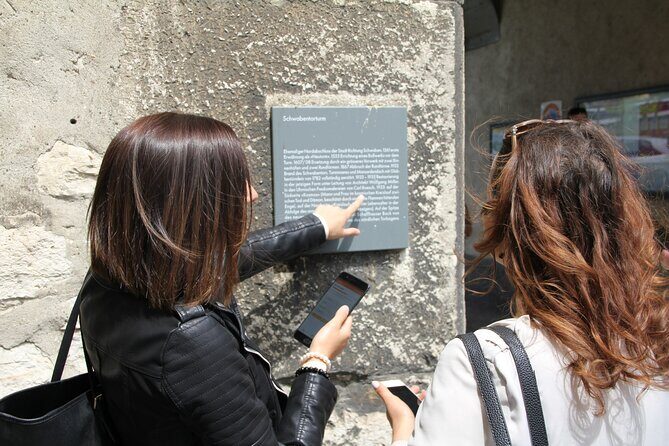
This tour runs through Action’s Tour Guide App. The crucial step is that you must download the tour while you’re on strong Wi‑Fi or cellular. After that, it works offline.
Here’s how to set yourself up for an easy start:
- Bring headphones/earbuds. The walk is hands-free, but you still need audio in your ears.
- Use a phone/tablet with GPS. The tour recommends iPhone (iOS 15+), Android (version 9+), or an iPad/tablet with GPS and cellular connectivity for navigation.
- When you arrive onsite, open the app and launch the tour that matches your planned starting point and direction.
Also, don’t assume you can just begin anywhere and have it magically correct itself. The tour is tied to the mapped route inside the app. If you jump around to random spots, you’re more likely to get the wrong story or no playback. The fix is simple: stay within the tour route and follow the app’s cues.
How to walk the route without missing stories

You’ll start at the MLK Visitor Information Center area. From there, you’ll move square to square and building to building. Each story is designed to last about the length of a short stop, roughly 5 minutes per location, which keeps the flow moving.
You don’t have to babysit the schedule. The audio plays automatically when you reach the right points. You can pause whenever you want, and you can resume later without losing your place—at least that’s the whole point of the self-guided design.
Practical tip: if the map glitches or collapses on you, don’t panic. Stop, reopen the map inside the app, and get oriented again. One review flagged that navigation can get frustrating if the map keeps needing to reopen, even with a decent signal. On your end, the best prevention is having your brightness set, phone battery charged, and the app running cleanly (close other audio apps so they don’t fight for sound).
The squares-and-architecture stretch: from MLK Visitor Center to Johnson and Wright Squares
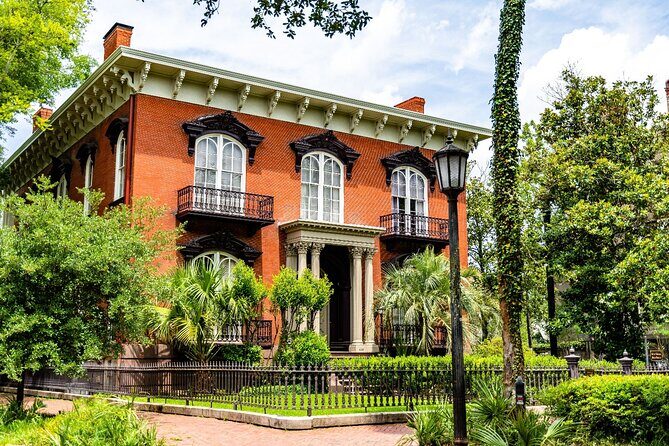
This is where the tour earns its keep. You move through Savannah’s visual core—public squares with famous monuments, plus churches and classic homes—while the audio explains why these places mattered.
Other self-guided audio tours in Savannah






Savannah MLK Visitor Information Center
Your walk begins here, with an orientation that sets the tone: cobblestone streets, antebellum architecture, and the stories of the people who shaped the city. It’s a strong starting point because it gives context before you hit the landmarks.
If you’re the type who likes to understand what you’re seeing before you photograph it, you’ll appreciate this opener.
First African Baptist Church
Next comes a stop focused on the African American community in Savannah and its role in the broader American story. If you want your walking route to include more than just building facades, this is one of the key early stops.
Reynolds Square (John Wesley)
At Reynolds Square you’ll see the John Wesley statue, tied to his role in founding the Methodist Church. This is a good moment to slow down for a minute. A statue can feel like a quick picture, but the audio framing gives it a point in the timeline of Savannah.
Olde Pink House
Then you’ll spot the Olde Pink House. The tour notes it was built in the 18th century and now operates as a restaurant serving southern cuisine. You’ll get the building’s backstory without needing to buy an entry ticket—use that to your advantage if you’re trying to keep the day budget-friendly.
Johnson Square (James Oglethorpe and Christ Church Episcopal nearby)
Johnson Square ties together two big threads: the founder of Savannah, James Oglethorpe, and the historic Christ Church Episcopal building nearby. This stop is great if you like your landmarks placed in context, not just listed.
Wright Square (William Washington Gordon and Mercer-Williams House sightline)
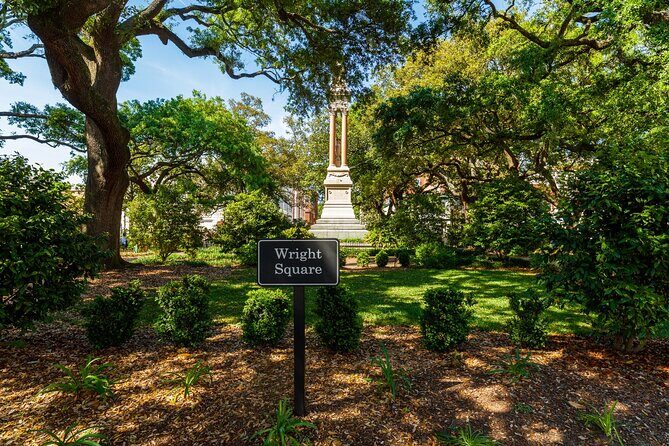
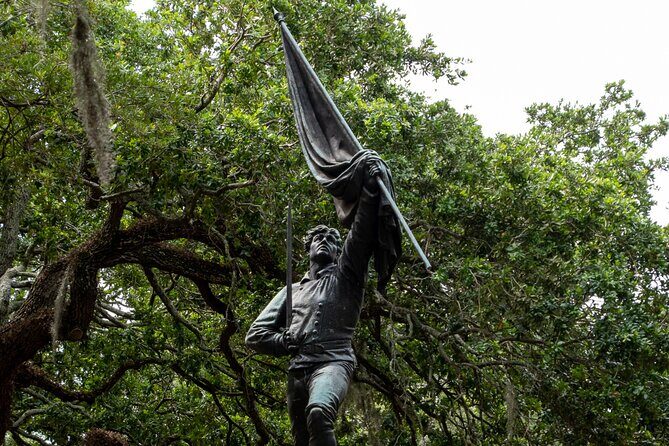
Wright Square points you to the William Washington Gordon statue and sets up what comes next by putting the Mercer-Williams House in view. Think of this as a preview. You’ll come back to the Mercer-Williams story in more detail later.
Drawback to consider on this stretch: it’s easy to get photo-happy. But because the audio moves on by location, you don’t want to wander too far off the route. If you stop for long breaks, just pause the tour so you don’t “race” the audio.
House museums and landmarks: Owens-Thomas, Chippewa Square, and the theatre era
The midsection of this walk shifts from squares into houses, churches, and famous civic buildings—more texture, more variation, and a couple spots where you might want to budget extra admission.
Owens-Thomas House & Slave Quarters (note on admission)
This stop highlights the Owens-Thomas House and its Slave Quarters museum component. It’s described as a historic museum with architecture you can admire and families you can learn about. The catch is that admission is listed as not included here.
If you’re interested in going inside, plan for a ticket or skip the interior if you’d rather stay on the audio-only budget.
Chippewa Square (architectural styles)
Chippewa Square is where the tour nudges you to watch for architectural variety. The audio calls out different styles you can spot around the square. This kind of storytelling works well on foot, because you can look left and right while the narrative explains what you’re seeing.
Independent Presbyterian Church of Savannah (Greek Revival facade)
Next is the Independent Presbyterian Church, with attention to its Greek Revival facade and its history connected to the Civil War era. Even if you don’t go inside, this is the kind of building where the exterior details reward your time.
Historic Savannah Theatre (note on admission)
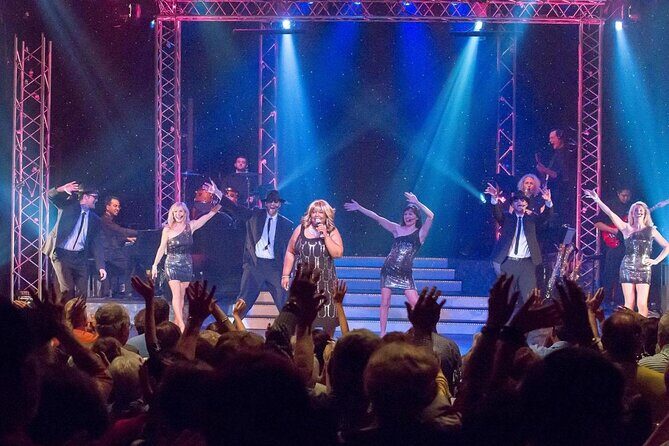
The Savannah Theatre stop covers a building dating to 1818 and described as one of the oldest continuously operating theatres in the United States. Admission is listed as not included.
If you want an interior look, this is a natural place to spend extra. If you don’t, the exterior story still gives you something to take away.
Harper Fowlkes House (1842, Greek Revival style, gardens)
Then the tour points out the Harper Fowlkes House, built in 1842 with neoclassical architecture and Greek Revival style details, plus a garden. This is a good “slow down and absorb” stop, especially if you enjoy grand homes and neat architectural lines.
From St. John the Baptist to the Sorrel-Weed House and literary Savannah

After the civic and residential highlights, the audio keeps shifting the lens. You go from religion to literature to local education—so your walk doesn’t feel repetitive.
Cathedral of St. John the Baptist (French Gothic and stained glass)
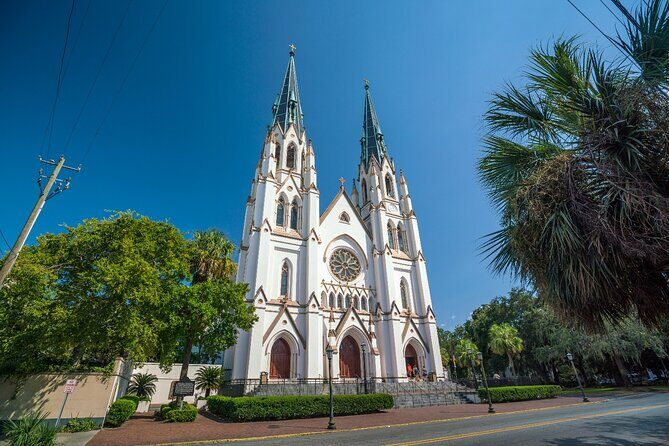
The Cathedral stop focuses on its French Gothic architecture and stained glass windows, plus the fact it opened in 1876. Religious buildings can be hit-or-miss on tours, but the architecture-centered audio makes this one feel intentional.
Old Sorrel Weed House Museum & Tours (and the paranormal note)
This stop mentions the Old Sorrel Weed House Museum, a 19th-century mansion known for Greek Revival architecture and for paranormal activity stories. It also notes guided tours exist inside.
Admission is listed as free in the provided details, so at minimum you should be able to access the tour information there as presented by the attraction. If you’re into haunted-house lore, this is probably one of the more entertaining segments.
Flannery O’Connor Childhood Home Museum
Next: Flannery O’Connor’s childhood home museum. The tour frames it as a literary treasure—your chance to connect with O’Connor’s life and influences through a preserved 20th-century atmosphere.
If you’re a book person, this is the stop where the audio starts to feel personal. If you’re not, it still works because it’s a change of pace from statues and architecture.
Massie Heritage Center
Then comes the Massie Heritage Center in a historic 1856 school building. The audio describes it as an education hub with interactive exhibits and programs tied to Savannah’s architecture, people, and heritage.
This is a smart “add depth” stop, especially if you want something more hands-on after a mostly outdoor walk.
Forsyth Park to the Civil Rights Museum and the riverfront finish
Now you reach the stretch that balances beauty with real emotional weight. You get a major park pause, then civil rights education, then maritime icons to close out the walk.
Forsyth Park (30 acres, fountain, gardens)
Forsyth Park is described as a 30-acre urban oasis with walking paths and a central fountain. The tour also calls out the park’s iconic fountain and gardens as an ideal setting for picnics and leisurely strolls.
Even if you don’t sit down, this is the part of the route where you can catch your breath. It’s also a good place to check your phone battery before the final miles toward the river.
Mercer-Williams House Museum (Italianate and Midnight in the Garden of Good and Evil)
Next is the Mercer-Williams House Museum. The tour notes its Italianate architecture and connects it to the book Midnight in the Garden of Good and Evil. The audio also points out that guided tours exist inside.
Remember: you already saw the Mercer-Williams House from Wright Square earlier. This stop is where you can turn a sightline into a full visit if you want.
Ralph Mark Gilbert Civil Rights Museum
Then the walking route shifts into a more direct civil rights focus. The museum is described as a poignant tribute to the struggle for civil rights, named after local activist Ralph Mark Gilbert. The audio highlights exhibits and artifacts about racial equality movements in the region.
This is one of those stops that changes the tone of a day. Plan for it emotionally. If you tend to rush through museums, slow down here. The audio at least sets up the place so it lands better when you’re standing in front of the exhibits.
The Waving Girl Statue
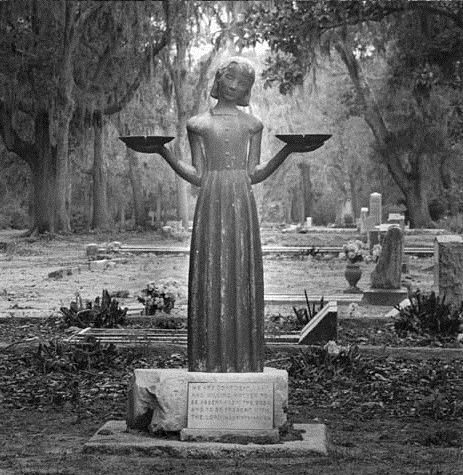
The tour ends the “serious” stretch with something warmer: the Waving Girl Statue honoring Florence Martus, a figure who greeted ships for decades. The audio explains it as a symbol of welcome for sailors entering the port.
This is where Savannah’s human side shows up—kindness, repetition, and a welcome gesture that became part of city identity.
The Pirates’ House (maritime lore and a dining option)
Next is the Pirates’ House, described as an 18th-century site with maritime lore and a restaurant and museum feel. The audio even notes it reportedly inspired parts of Robert Louis Stevenson’s Treasure Island.
If you want a practical payoff at the end, this is a good place for a meal because you’re already in the right neighborhood mood-wise.
Davenport House Museum (1820 Federal-style home)
Finally, the tour points you to the Davenport House Museum, a well-preserved Federal-style home built in 1820. It’s described as a portal to the 19th century with period furnishings and guided tours.
This last stop is a nice capstone: you finish where you can step into earlier Savannah domestic life rather than ending only with maritime scenes.
How to make the walk comfortable (and avoid app hiccups)
Because the route is over 5 miles, comfort matters. The experience is designed to fit in about 1–2 hours if you keep pace. If you stop often for photos, add more time.
A couple practical things I’d do before starting:
- Wear shoes you can walk in for a long stretch. This is not a “light” tour.
- If it’s windy or cold, dress for it. One review specifically mentioned low 40s temps with winds off the river as not ideal for a walking day.
- Keep your phone powered. The app experience depends on your device functioning smoothly.
- Bring headphones and keep volume moderate. You want the audio clear, but you also want to hear what’s happening around you for safety.
On the app side, remember the biggest lesson from real-world feedback: don’t try to start randomly and expect the tour to adjust. If playback feels wrong, it’s usually because you’re not following the mapped route in the app or another audio app is interfering. Restarting the right tour inside Action’s Tour Guide App usually fixes it.
Who this self-guided Savannah audio walk is best for
This tour is a great fit if:
- you want control over timing (start and stop for shopping, snacks, photos),
- you like learning while you walk instead of spending time in a classroom setting,
- you’re budget-minded and want narration plus a route without paying for lots of separate guided admissions.
You might not love it as much if:
- you want a truly teacher-style, back-and-forth guide (this is audio, not Q&A),
- you dislike any phone-based navigation at all,
- you’re short on time and can’t handle a 5+ mile loop, even if it’s doable in 1–2 hours.
Also, couples can split headphones by sharing one tour by splitting headphones, which can make the per-person cost even better.
Should you book this Historic Savannah Self-Guided Walking Audio Tour?
I’d book it if you want an organized Savannah walk that still feels casual. The combo of offline GPS, automatic hands-free audio, and a lifetime ticket makes it a smart buy—especially at $14.99—because you get to use it more than once.
I’d think twice if you’re not into walking. Over 5 miles is the reality, and two notable stops list admission not included, so you may end up adding tickets if you want the full inside experience.
If you’re visiting Savannah for your first time and want a way to connect the dots between squares, churches, houses, and museums, this tour gives you a practical route—and it helps you slow down just enough to notice the details you’d otherwise miss.
FAQ
How long does the Historic Savannah self-guided walking audio tour take?
The tour is estimated at about 1–2 hours, depending on your walking pace and how often you pause for photos or breaks.
Where does the tour start and end?
It starts at 301 Martin Luther King Jr Blvd, Savannah, GA 31401, USA, and ends back at the meeting point.
Is the tour self-guided, or do I meet someone in person?
It’s self-guided. There’s no one meeting you at the start; you open the app onsite and begin at the first story’s point.
Does it work without cellular or Wi‑Fi?
Yes. You must download the tour while you have strong Wi‑Fi or cellular, and then it works offline after download.
Are the audio stories in English?
Yes, the tour is offered in English.
Is admission included for every stop?
Not for every location. The Owens-Thomas House & Slave Quarters and the Historic Savannah Theatre are listed as admission not included, while many other stops are listed as admission free.
What devices do I need for the tour to work well?
The tour recommends an iPhone running iOS 15 or later, an Android device running version 9 or later, or an iPad/tablet with GPS and cellular connectivity for navigation.