REVIEW · SAVANNAH
Private Savannah Medical History Walking Tour
Book on Viator →Operated by Savannah Medical History Tours · Bookable on Viator
Medical clues hide in plain sight. This private Savannah medical history walk turns famous landmarks into real-world lessons about illness, care, and survival, led by registered nurse Matthew. I especially liked getting Matthew’s medical perspective at the right level and seeing how the tour links people and events to specific places, not vague narration. One heads-up: the route is 1.6 miles and the themes can get heavy when slavery and medical tragedy enter the story.
You’ll also like how the walk stays practical. You don’t need special knowledge to follow along, and if you are in medicine you’ll feel the guide can meet you there—jargon ramps up or down fast.
The only real drawback I’d flag is the outdoor factor. Savannah summer heat can hit 90 degrees, and you’ll be walking historic streets for about 90 minutes, with no indoor stops.
In This Review
- Key reasons this tour works so well
- Why a Savannah medical history walk feels different than standard sightseeing
- Price and logistics: what $25 buys you in real life
- Meeting at 15 E Park Ave and walking toward Johnson Square
- Stop 1: Old Telfair Women’s Hospital and Mary Telford’s women’s health impact
- Dueling medicine: doctors, injury, and a Declaration signer case study
- The Midnight in the Garden of Good and Evil chapter through a medical lens
- The Girl Scouts founder’s hearing story and a medical turning point
- Owens-Thomas House and Slave Quarters: when medicine meets slavery
- Ending at Johnson Square: wrap-up, directions, and what to do next
- Who this private medical history tour is best for
- When you might want to choose something else
- Should you book the Private Savannah Medical History Walking Tour?
- FAQ
- FAQ
- How long is the Savannah Medical History Walking Tour?
- How far do you walk during the tour?
- Is this a private tour?
- Where does the tour start and what time does it begin?
- Where does the tour end?
- Do you enter any buildings during the tour?
- Who leads the tour?
- Is it suitable for everyone in terms of walking and fitness?
- Is the tour affected by weather?
- What’s the cancellation policy?
Key reasons this tour works so well

- Nurse-led storytelling that connects medical ideas to real buildings and events
- Matthew adjusts the medical level to match what you know and what you want to hear
- Landmarks you view from outside still make the stories land
- A private format keeps the pace human and the questions welcome
- Savannah’s harder chapters are handled with a medical lens, not just shock value
- Easy end point in Johnson Square for a smooth transition to food and shopping
Why a Savannah medical history walk feels different than standard sightseeing
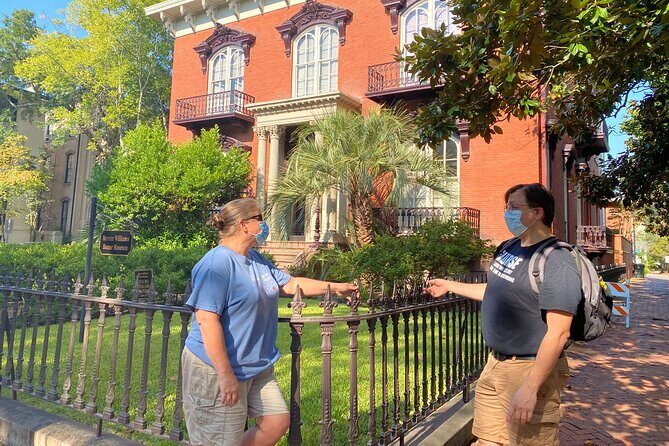
I love Savannah for the romance of brick streets and old squares. This tour adds another layer: bodies, disease, treatment, and how communities tried to cope when medical options were limited. Instead of just pointing at history, the guide ties each moment to what people could realistically do—who had access to care, how injuries were handled, and what happens when people are denied safety and dignity.
The value here isn’t that you get random “medical facts.” It’s that you get a focused framework for interpreting the city. You end the walk looking at the same blocks and thinking, What did people worry about here? Who could get help? What did care look like when the tools were basic?
And because it’s private, you’re not stuck with a one-size-fits-all script. Matthew’s style—friendly, clear, and adjustable—shows up in how he explains concepts to your level.
Other walking history tours in Savannah



Price and logistics: what $25 buys you in real life

At $25 per person, this is priced like something you’d expect to be group-based. But the experience runs as a private tour with only your group, which changes everything about attention and pacing.
You’re on a simple schedule: start at 9:30 am, then spend about 1 hour 30 minutes walking. The route covers about 1.6 miles on historic streets, and you’ll see several key locations without going inside any of them.
Two practical notes that matter. First, it’s an outdoor walk, so plan for sun and shade. Second, you should have moderate physical fitness since you’ll be on your feet the whole time. The tour is near public transportation, and service animals are allowed, which helps if you’re planning around how your group travels.
Meeting at 15 E Park Ave and walking toward Johnson Square

You meet at 15 E Park Ave in downtown Savannah. The plan is to start near the old Telfair Women’s Hospital area, then work through a sequence of stops that build themes: women’s health, violence and medical support, famous scandals viewed through a health lens, and then the grim medical realities tied to slavery and human transport.
The end point is Johnson Square at 2 E Bryan St, right in the thick of restaurants and shopping. That matters because you can turn the walk into a full morning: learn first, then eat and wander right after while everything is fresh in your mind.
Stop 1: Old Telfair Women’s Hospital and Mary Telford’s women’s health impact
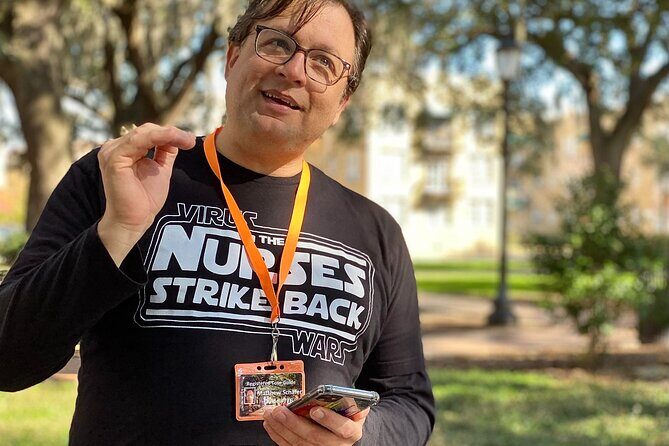
The tour begins across the street from the park at the old Telfair Women’s Hospital. If you’ve already run into Mary Telford’s name through museum storytelling, this stop gives you a different angle—how one of Georgia’s early feminists made an impact on women’s health.
What I like about starting here is that it sets tone without immediately going dark. The guide frames the building and the person behind it as part of a bigger pattern: when women don’t have power, their health tends to be treated like an afterthought. When a community shifts, you often see it first in who gets listened to—and what gets built.
Since you’re not entering the premises, your main job is to look. Notice the location in relation to the park, the way downtown streets channel foot traffic, and how institutions like this sit inside the city’s everyday life. That outside-view approach actually works well for this tour, because it keeps the focus on context rather than museum layout.
Dueling medicine: doctors, injury, and a Declaration signer case study

Savannah is known for dueling, and this guide treats it like a case study with medical consequences. The common practice, as explained on the walk, was that at least one doctor needed to be present. That detail alone changes the story: dueling isn’t just about honor. It’s also about injury management, speed, and the limits of what someone could do before modern emergency medicine.
Matthew walks you through implications using a case study that includes one of the original signers of the Declaration of Independence. You don’t need to be a history buff to follow it. The guide connects the dots between a famous name and the practical reality of what doctors were expected to handle in the middle of violence.
This stop is a great example of why the tour isn’t just “medical facts.” It’s asking a real question: when the system values life-and-death outcomes differently, what does care become? The answer, in this context, is complicated.
Other private and custom tours in Savannah






The Midnight in the Garden of Good and Evil chapter through a medical lens

The tour’s next beat leans into one of Savannah’s best-known modern references: Midnight in the Garden of Good and Evil. Instead of treating the book and movie as entertainment only, Matthew reframes parts of the story from a medical perspective.
You’ll get the sense that the guide is looking at themes like illness, death, and the way people explain the body when things go wrong. That’s a smart move because it helps you read the cultural story with new questions. Not just who did what, but what people thought was happening medically—and why that mattered socially.
If you’ve seen the film or read the book, this stop gives you a chance to compare your memory to a different set of priorities. If you haven’t, you still won’t feel lost, because the guide’s focus stays on how health and injury shape human behavior.
The Girl Scouts founder’s hearing story and a medical turning point

One of the more unusual stops comes next: the founder of the Girl Scouts, whose hearing story includes a childhood accident that left her deaf in one year, but not permanently in the way you might assume. The tour then adds another medical twist later in life: a medical tragedy that saved her from a loveless marriage.
This is where the tour does something I really appreciate. It shows how medical events can steer entire life paths—not only through outcomes, but through access, timing, and how people interpret symptoms. It’s also a reminder that medicine doesn’t sit in a lab. It lives in families and decisions.
Because the tour is walking-focused and you’re not touring inside, the power of this stop is mostly in the explanation. Matthew makes the story feel connected to Savannah’s larger pattern of care and constraint, rather than a random biography sidebar.
Owens-Thomas House and Slave Quarters: when medicine meets slavery
This is the emotional core of the tour. At the Owens-Thomas House and Slave Quarters, the guide discusses that the house was built by a slave trader, then connects Savannah’s role in buying and selling enslaved people to the medical implications of enslavement.
Here, the tour doesn’t treat slavery as background. It treats it like a health system with deliberate harm. You’ll hear about how enslaved people were transported across the Atlantic on cramped ships and what that meant for health, safety, and survival—both during transport and after arrival.
I’d describe this stop as heavy, but not aimless. Matthew’s approach keeps it grounded in the practical consequences of policy and profit. You come away with a clearer understanding that medical outcomes weren’t just “bad luck.” They were often the result of violence, deprivation, and denial of care.
If you want a tour that tells the truth about how medicine and power collide, this stop delivers. If you’re looking for light, breezy history only, you may find this section tougher than the rest—plan your mood accordingly.
Ending at Johnson Square: wrap-up, directions, and what to do next
The tour ends at Johnson Square. This part is simple but useful: Matthew wraps up, then offers directions to other attractions and recommendations for area restaurants and shopping if you want that.
I like end points like this because it turns learning into action fast. You’re done with the walk, but you’re still close to the places that make Savannah feel like Savannah. You can keep exploring while the story threads from the tour still connect in your head—especially around themes of care, violence, and who had access to it.
Who this private medical history tour is best for
This experience is ideal if you fall into any of these groups:
- You like history that explains cause and effect, not just dates.
- You’re curious about public health and how communities handled crises long before antibiotics and modern trauma care.
- You work in healthcare or study it and you want a tour that respects medical detail.
- You want something more personal than a big group bus tour, with a guide who can shift gears.
It’s also a strong match if you’re traveling with one or two people and you want the conversation to feel tailored. Private tours work best when the guide can read your interests. Here, Matthew’s adjustments show up clearly in the way he calibrates medical terminology.
When you might want to choose something else
Skip this tour if you can’t handle serious topics. The slavery-focused stop is real and emotionally heavy.
Also consider your timing and heat tolerance. Since Savannah can hit 90 degrees in summer and you’re walking the whole time, you’ll enjoy it more if you go prepared with water, breathable clothing, and a willingness to slow down when needed.
Should you book the Private Savannah Medical History Walking Tour?
If you want Savannah in a different light—built for people who care about how medicine, health, and society connect—this is a smart pick. The private format, the nurse-led guidance from Matthew, and the way the tour anchors stories to specific places make the $25 price feel like a bargain rather than a compromise.
Book it if you like history with practical meaning and you’re comfortable with the tougher chapters. I’d pass only if you’re after a purely light, scenic walk or you know you struggle with heat and longer outdoor walking.
FAQ
FAQ
How long is the Savannah Medical History Walking Tour?
It runs about 1 hour 30 minutes (approx.).
How far do you walk during the tour?
You’ll walk about 1.6 miles over historic streets.
Is this a private tour?
Yes. It’s private, and only your group participates.
Where does the tour start and what time does it begin?
It starts at 15 E Park Ave, Savannah, GA 31401 at 9:30 am.
Where does the tour end?
The tour ends at Johnson Square (2 E Bryan St, Savannah, GA 31401).
Do you enter any buildings during the tour?
No. You visit sites but do not enter the premises.
Who leads the tour?
The tour is led by a registered nurse. Matthew is identified as the featured guide.
Is it suitable for everyone in terms of walking and fitness?
It’s recommended for travelers with moderate physical fitness level.
Is the tour affected by weather?
Yes. It requires good weather. If it’s canceled due to poor weather, you’ll be offered a different date or a full refund.
What’s the cancellation policy?
You can cancel for a full refund up to 24 hours before the experience starts. If you cancel less than 24 hours before, you won’t get a refund.