REVIEW · SAVANNAH
Walking Tour of Savannah’s Historic District
Book on Viator →Operated by Savannah Sidewalk Tours LLC · Bookable on Viator
One walk, Savannah’s historic rhythm. This small-group tour gives you a fast, satisfying sweep of the Historic District, using the city’s squares, key buildings, and waterfront streets to explain how Savannah really works. A licensed guide ties the stops together with stories you can use as soon as you step off the tour.
I especially like the way this walk helps you get your bearings fast. You spend two-plus hours moving from one landmark to the next, which is exactly what you want on a first trip, and you’re not stuck passively listening in one place. I also like that you can ask questions along the route, since the group is capped at 15 people.
One possible drawback: if your main goal is heavy architecture detail, you might wish for more focus on building styles and less on everyday culture and what to see next. One guest feedback pointed out that the tour can lean more toward the city’s living scenes than a strict architectural checklist.
In This Review
- Quick hits
- Why This 2-Hour Walk Gives You Real Value
- Starting at Olde Pink House: Reynolds Square Basics
- River Street: The Waterfront Scene and Its Darker Thread
- Moving Through the Squares: Johnson and Wright’s City Logic
- Chippewa Square and Oglethorpe: The Founding Thread
- Cathedral of St. John the Baptist: If You Can Go Inside
- Historic Homes: Hamilton-Turner, Andrew Low, and More
- Armstrong House and the Big Finish at Forsyth Park
- Price, Pace, and Group Size: What $35 Really Buys
- Who Should Book This Tour (and Who Might Want Something Different)
- Should You Book This Savannah Historic District Walking Tour?
- FAQ
- How long is the Savannah Historic District walking tour?
- What does the tour cost?
- Where does the tour start and end?
- What time does the tour begin?
- Is the tour group large?
- Is the tour guided by professionals?
- Is this tour in English?
- Is the ticket mobile?
- How much walking is involved?
- Are there any stops with indoor access?
- What’s included and not included in the price?
Quick hits

- A tight 2h15 loop that covers the core of Savannah’s Historic District without feeling rushed.
- Squares as your map: Reynolds, Johnson, Wright, and Chippewa help you understand the layout.
- River Street with context, including a brief mention of slavery in Savannah.
- Church time if it’s open at Cathedral of St. John the Baptist, so you may get a look inside.
- Historic homes with big names, from the Andrew Low House to the Hamilton-Turner House.
- Small-group Q&A, with a max of 15 guests, so the guide can answer real questions.
Why This 2-Hour Walk Gives You Real Value
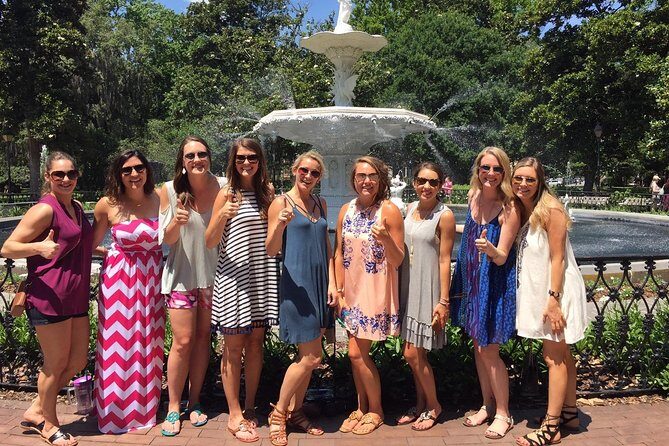
At $35 per person for about 2 hours and 15 minutes, the value is not in ticketed entrances. Most stops are free to view from the sidewalk. The value is in having someone connect the dots: why a square is where it is, why River Street mattered, and how Savannah’s public spaces shape the city’s identity.
This is the kind of tour I recommend when you want context before you start wandering on your own. Savannah can feel like a picture post card at first glance, but the stories around the squares and buildings make it click. By the time you reach Forsyth Park, you should feel oriented enough to explore further without guessing.
Also, it helps that it’s a small group. With a maximum of 15 people, the guide has room to correct misunderstandings and answer questions without talking over you.
Other walking history tours in Savannah



Starting at Olde Pink House: Reynolds Square Basics
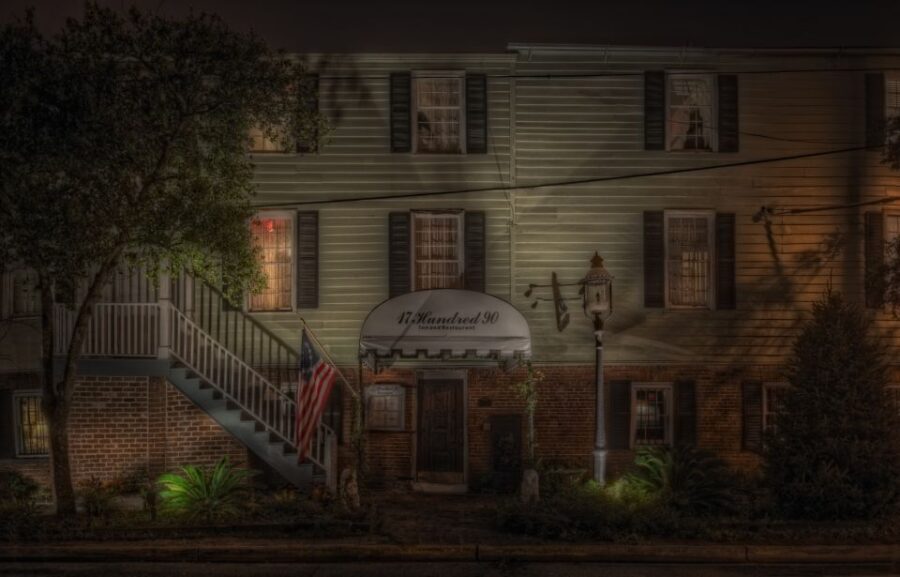
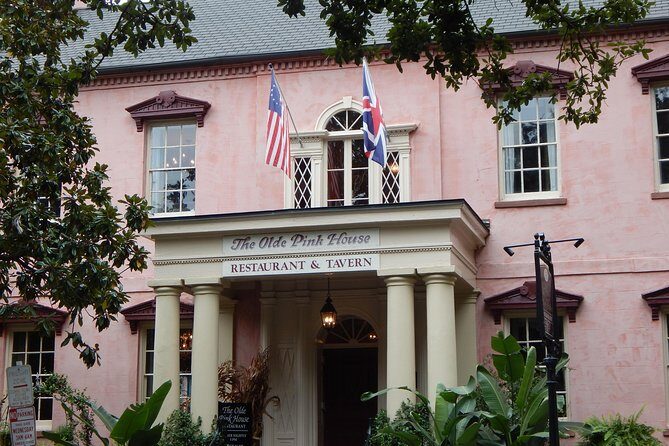
Your walk begins at the Olde Pink House on Abercorn Street, right by Reynolds Square near a John Wesley statue. This is a good opening choice because you’re immediately in one of Savannah’s classic public spaces. The guide starts by pointing out what you’re looking at and what to notice as you go.
Reynolds Square also sets up a key theme for the tour: Savannah’s landmarks are not isolated. Even early on, you get context for nearby places like the Olde Pink House Restaurant and Tavern, and why it has earned its reputation. If you’re the type who enjoys learning how a city’s famous spots got famous, this first segment does a lot of heavy lifting.
Practical note: you’ll likely cover several blocks on foot during the tour. Comfortable shoes matter here. The route is manageable for a moderate walking level, but it adds up.
River Street: The Waterfront Scene and Its Darker Thread
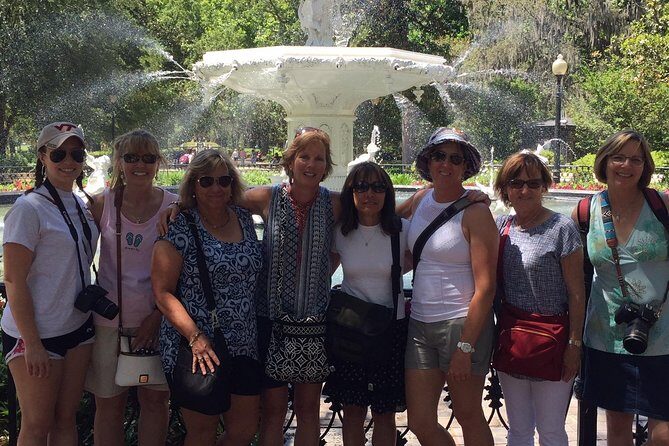
Next you head to Historic River Street, where the guide explains why this stretch is more than just an attractive backdrop. You’ll get the sense that River Street became Savannah’s premier gathering place for dining, drinking, and entertainment. In other words, it’s part nostalgia, part daily life.
What I liked here is that the tour doesn’t treat the waterfront as only “fun.” You also get a brief talk about slavery in Savannah. Even a short mention helps, because it puts Savannah’s beauty into a fuller frame instead of pretending history was only pleasant.
This stop is also useful for planning. If you know River Street’s role, you can decide when to visit it later—daytime for photos and evening for atmosphere—rather than accidentally treating it like any other riverwalk.
Moving Through the Squares: Johnson and Wright’s City Logic
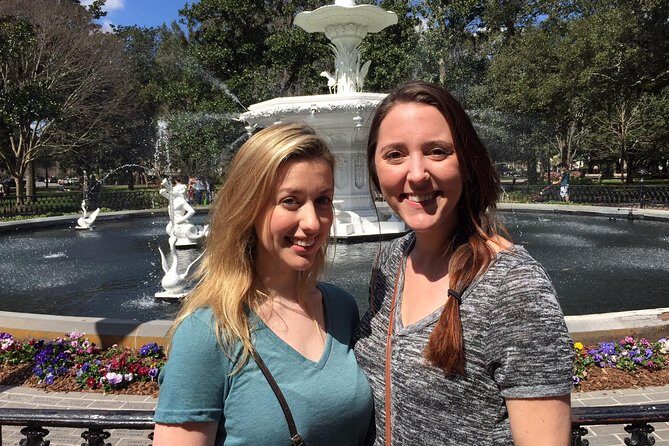
After Reynolds Square and River Street, the tour shifts back into the grid of Savannah’s squares. At Johnson Square, you learn how the city connects to the American Revolution and Civil Wars. That’s a smart move, because it shows that these green spaces were designed for people with real stakes and real politics, not just for strolling.
Then you stop at Wright Square, where the focus turns to Savannah’s culture. This is one of the reasons I like walking tours like this. Squares sound similar on a map, but once someone narrates the vibe and the why-behind-the-where, they start to feel distinct.
At these square stops, you’re not just hearing facts. You’re learning how to read the city. If you continue exploring after the tour, you’ll recognize which squares are connected to historic eras and which ones are best for a slower break.
Chippewa Square and Oglethorpe: The Founding Thread
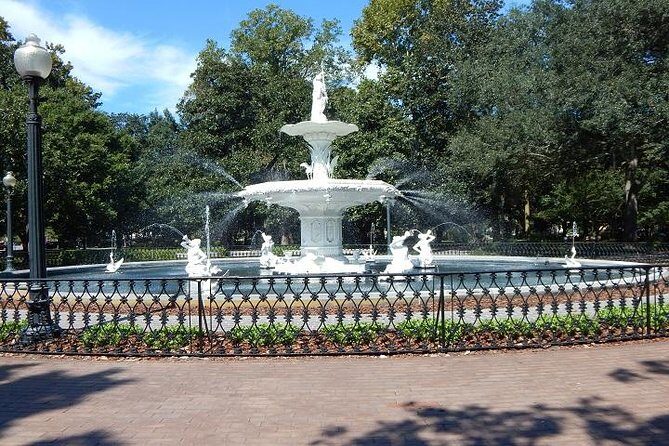
Chippewa Square is a major anchor because you’re at the statue of Savannah’s founder, James Edward Oglethorpe. This is where the tour helps you understand the city’s origin story without forcing you to memorize dates.
Oglethorpe is not just a name you’ll see on a plaque. The guide’s framing makes the founding logic feel practical: Savannah’s plan, its public spaces, and its priorities all tie back to how it began.
For me, this stop is a great payoff moment. You move from general layout to a specific person and then back into the city’s continuing story. It’s the kind of structure that keeps a 2-hour tour from feeling like a random collection of photos.
Other historic district tours in Savannah






Cathedral of St. John the Baptist: If You Can Go Inside
You’ll also stop at the Cathedral of St. John the Baptist. Even if you can only view it from the outside, you’ll get the history of the church and why it matters in Savannah’s story.
If the cathedral is open, the tour includes a look inside for about that same ten-minute window. That’s a nice touch because church interiors can change your sense of a place in seconds—light, scale, and design all do their job.
One caution: cathedral openings can vary, since the tour notes that interior access depends on whether it’s open. If you’re visiting on a tight schedule, I’d treat inside time as a bonus, not a guarantee.
Historic Homes: Hamilton-Turner, Andrew Low, and More
Between the big public squares and major religious sites, this tour gives you a human scale through historic homes. It’s brief—think “you notice, you understand, you move on”—but that brevity works for an intro tour.
You’ll get a stop at the Hamilton-Turner House, where the guide shares background on the bed and breakfast inn that occupies the historic space. Then there’s a quick look at the Andrew Low House, tied to Juliette Gordon Lowe, founder of the Girl Scouts of America. Those names help the stories land because they connect Savannah’s historic buildings to broader American life.
The route also includes views related to the Mercer Williams House Museum and the Temple of the Congregation Mickve Israel. Even if you only spend a few minutes here, it broadens the tour beyond one single thread of history.
If you’re trying to decide what to do next, this is where the tour helps you pick follow-up visits. You’ll leave with enough names to decide what kind of museum experience you want, rather than walking around later feeling like you missed the point.
Armstrong House and the Big Finish at Forsyth Park

Toward the end, you stop at the Armstrong House, a historic mansion downtown. The guide gives a brief history, and even in a short stop, it helps you understand how wealth, family stories, and city growth show up in physical architecture.
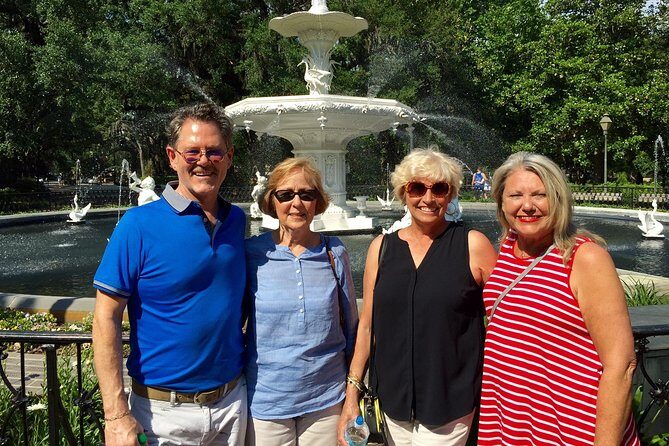
Then the tour wraps at Forsyth Park. This matters more than it sounds. Forsyth Park is not just a nice end point—it’s a natural transition space. After two hours of historic district context, you can slow down, take photos, and decide whether to head back into the grid for more exploring or move outward.
The mental effect is simple: you go from “I’m wandering” to “I know where I am and why it’s important.”
Price, Pace, and Group Size: What $35 Really Buys
Let’s talk money in plain terms. At $35 per person, you’re paying for a guided story, not museum entry fees. Since most stops are free to view from the outside, the guide is the product: the narration, the context, the ability to answer questions, and the way the route helps you make sense of Savannah.
Time-wise, plan for about 2 hours and 15 minutes. That’s long enough to cover a real chunk of the district, but short enough to still have a full day for independent exploring after the tour ends.
Group size matters here too. Maximum 15 keeps it interactive. You’re not stuck listening to a lecture while the front row runs ahead and you’re stuck behind. In at least one booking example, when the group was small, it became more personalized—something you’ll usually appreciate in a city best experienced on foot.
Who Should Book This Tour (and Who Might Want Something Different)
Book this if you want an efficient first pass through Savannah’s Historic District. It’s ideal for couples, solo travelers, and anyone who wants a guided foundation before they start choosing restaurants and self-guided photo stops.
Book this if you enjoy culture and city layout just as much as historic buildings. The tour touches on major landmarks, but also includes everyday context, including what to look for as you walk and how the city functions today.
Consider something else if your main obsession is architecture detail. One guest noted they wanted more emphasis on architecture specifically. If that’s your top priority, you may want an architecture-focused tour alongside—or instead of—this one.
Should You Book This Savannah Historic District Walking Tour?
Yes, if you want a smart, guided overview that helps you understand the city quickly. For $35, you get a licensed guide, a small group, and a route that hits major squares, River Street, key historic homes, and the church stop—then finishes in Forsyth Park, where you can continue exploring with confidence.
I’d say skip it only if you’re chasing deep architectural analysis as your main goal. Otherwise, this is a great way to get Savannah’s layout and stories into your head fast, so the rest of your day feels intentional rather than accidental.
FAQ
How long is the Savannah Historic District walking tour?
It runs about 2 hours 15 minutes (approx.).
What does the tour cost?
The price is $35.00 per person.
Where does the tour start and end?
It starts at the Olde Pink House, 23 Abercorn St, Savannah, GA 31401 and ends in Forsyth Park, Savannah, GA 31401.
What time does the tour begin?
The start time is 10:00 am.
Is the tour group large?
It has a maximum of 15 people per tour.
Is the tour guided by professionals?
Yes. It includes a licensed and professional tour guide.
Is this tour in English?
Yes, it is offered in English.
Is the ticket mobile?
Yes. The tour uses a mobile ticket.
How much walking is involved?
The tour involves a moderate amount of walking. Comfortable walking shoes are recommended, and a moderate physical fitness level helps.
Are there any stops with indoor access?
The Cathedral of St. John the Baptist stop includes going inside only if it is open.
What’s included and not included in the price?
Included: the guide and all taxes, fees, and handling charges. Not included: hotel pickup and drop-off.