REVIEW · SAVANNAH
Rising Voices: Underrepresented History (by Walk With Me Savannah Tours)
Book on Viator →Operated by Walk with Me Savannah Tours · Bookable on Viator
Savannah hides stories in plain sight. Rising Voices: Underrepresented History re-reads the city’s best-known landmarks through voices that often get left out, turning Franklin Square, City Market, and Telfair Academy into something sharper and more personal.
I like two things most: the way the route stays practical and on foot, and the way it spotlights people and communities tied to Savannah’s Black, queer, female, and Native history. One drawback to keep in mind is stamina and weather, since it is not recommended if you can’t walk or roll for about 15 minutes without stopping, and the tour needs good conditions.
In This Review
- Key Things I’d Bet You’ll Care About
- Why This Savannah Walking Tour Feels Different Than Usual
- Price and Timing: Is $40 a Good Value?
- Meet at Saint Julian Street, Then Learn Savannah by Walking
- Franklin Square: Haiti in the Revolution and the Underground Railroad Connection
- City Market: Lady Chablis, a Slave-Market Site, and a Freedmen’s School
- Telfair Academy: Mary Telfair and the Preservation Legacy
- Wright Square: Tomochichi, Coosaponakeesa, and Savannah’s Native Leadership
- Juliette Gordon Low Birthplace Museum: Women Who Didn’t Fit the Script
- Chippewa Square: Susie King Taylor and the Haitian Catholic Church Thread
- Madison Square: Field Order 15 and Practical Reparations
- Monterey Square: Jim Williams, Restoration Roots, and Count Pulaski’s Likely Intersex Identity
- What the Experience Is Like in Real Life
- Who This Tour Suits Best
- Should You Book Rising Voices in Savannah?
- FAQ
- How long is the Rising Voices walking tour?
- Where does the tour start and end?
- What’s the price per person?
- Do I need a printed ticket?
- What stops are included?
- Is there an admission fee for the stops?
- Is the tour suitable if I have mobility limits?
- Are service animals and pets allowed?
- What if the weather is bad?
Key Things I’d Bet You’ll Care About
- A 2-hour walking route through major squares, ending at Monterey Square by the Pulaski monument
- Eight stops focused on underheard stories, not just general sightseeing
- Franklin Square to Underground Railroad connections, including the First African Baptist Church
- City Market details that connect LGBTQ+ legacy and slavery-to-freedmen’s schooling
- Field Order 15 through black pastors and community leaders led by Garrison Frazier
- A guide who adjusts on the fly, with Sargon specifically noted for answering lots of questions
Why This Savannah Walking Tour Feels Different Than Usual
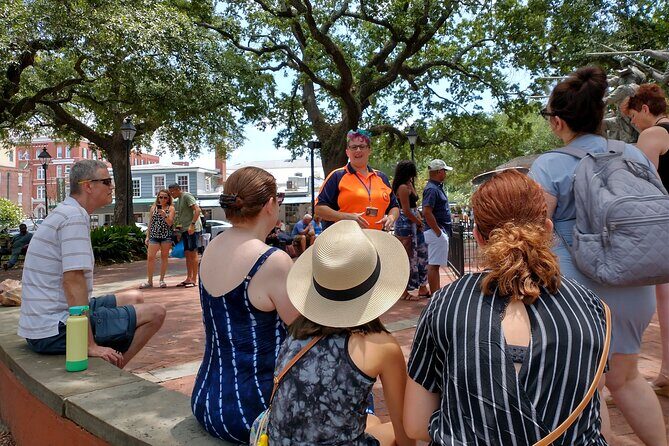
Savannah’s “must-see” sites are famous for a reason. But on most tours, you get the polished headline version. Rising Voices is built to give you the parts that explain why the city looks the way it does, who paid the costs, and who fought back.
What makes this tour work is the format: short stops, big context, and plenty of time to ask questions. The pace is designed for the central squares, where you can quickly understand geography and then connect dots. And because it runs with a small group cap of 20, you’re not fighting for your turn to speak.
This is also a tour where the stories aren’t treated like a side note. You’ll hear connections between the Haitian Revolution and Savannah’s African-American religious life, between slavery-era commerce and post-emancipation schooling, and between women’s civic change and the future of girls’ organizations.
Other African American and Gullah Geechee history tours in Savannah
Price and Timing: Is $40 a Good Value?
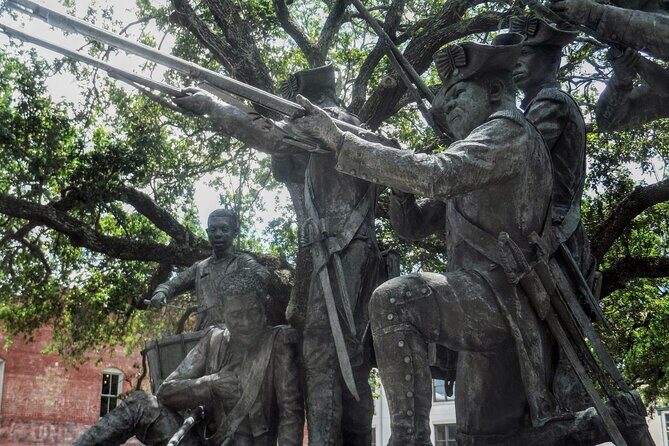
At $40 per person for about 2 hours, the value comes down to what you’re buying: guided context and interpretation across multiple central landmarks. Many Savannah tours focus on one theme or one attraction. This one uses a tight walking loop to cover eight meaningful stops, so you get more than a “highlight reel.”
I also like that you can pick start times to fit your day. Since Savannah tours stack up quickly—especially in peak season—having schedule options matters. If you’re trying to build a day around the squares, this format makes it easier to plan.
A practical note: you’ll want to treat this like a real city walk, not a drive-through slideshow. Wear shoes you trust, bring a little water, and plan to stand near your guide at the squares, where street noise can pop up.
Meet at Saint Julian Street, Then Learn Savannah by Walking
The tour starts at 901 W Saint Julian Street and finishes at Monterey Square (next to Count Casimir Pulaski’s monument). That end point is handy. After the tour, you’ll already be oriented to the central grid, so it’s easier to wander to nearby cafes, museums, or additional stops.
The group size is capped at 20, which usually means the guide can keep control of sound and attention even when cars get loud near the squares. You also get the benefit of a walking route: you notice details you might miss if you’re only moving by car.
This one uses a mobile ticket, which is convenient. Just make sure your phone has enough battery, because Savannah walking tours can stretch across multiple stops without much of a “reset” moment.
Franklin Square: Haiti in the Revolution and the Underground Railroad Connection
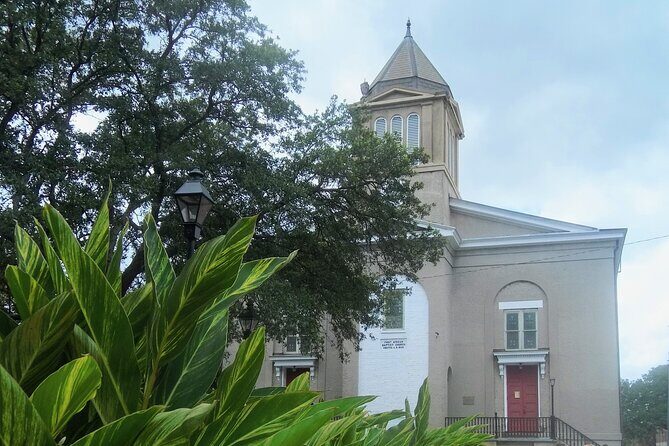
Franklin Square is where the tour sets its tone: history here isn’t just American in a narrow sense. You’ll hear how Haitians volunteered during the American Revolution, and how that early international thread links to later African-American community building.
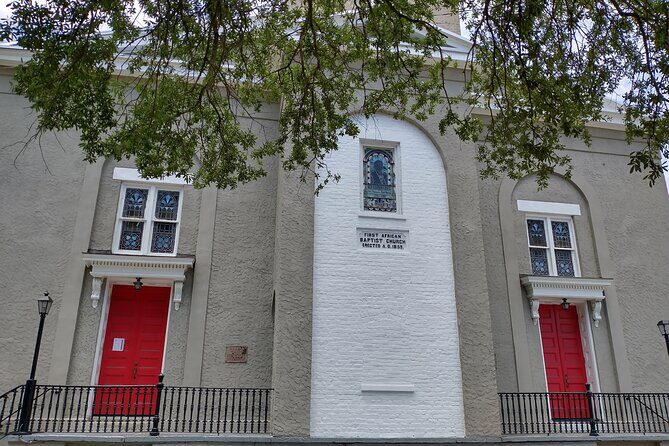
Then the focus shifts to education and survival. You’ll learn about clandestine schools that taught literacy to Black students when education was outlawed. From there, the tour points you toward the First African Baptist Church, including the fact that it houses the oldest African Baptist congregation in the country, along with the church’s role in the Underground Railroad.
The special part: you see a major square and realize it’s tied to networks, not just monuments.
The consideration: this stop is brief, so bring a note-taking mindset. If you pause mid-story to take photos, you may miss the key names and connections.
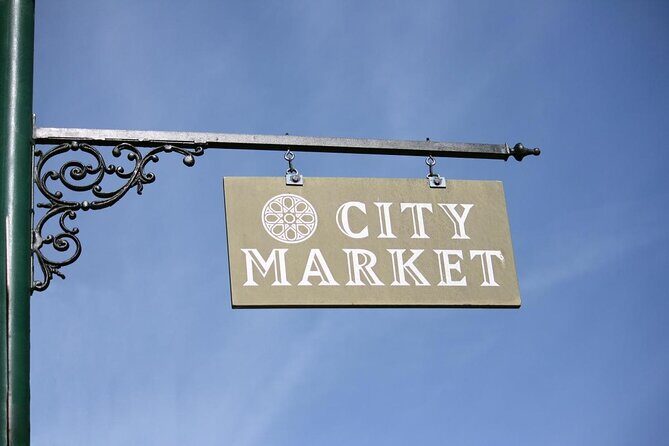
City Market: Lady Chablis, a Slave-Market Site, and a Freedmen’s School
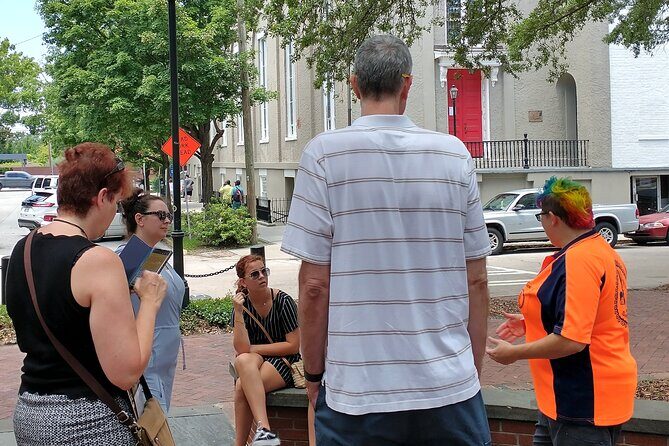
City Market is famous for shopping and energy. On this walk, it becomes a place to reckon with how quickly commerce and cruelty can change shape—and how community rebuilds after emancipation.
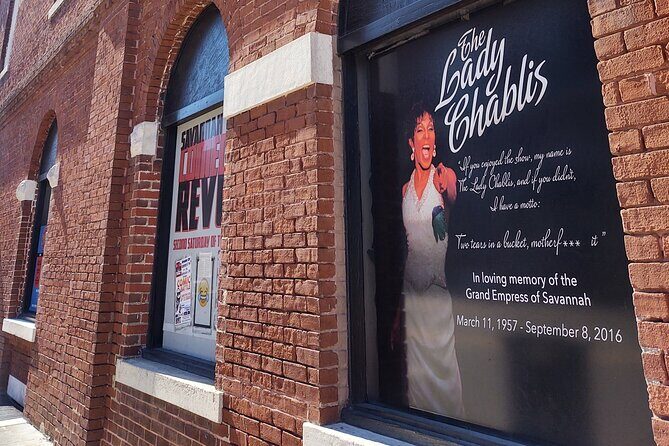
You’ll pass Club One, tied to Lady Chablis, who is treated here as a Savannah LGBTQ icon. The point isn’t just “who was famous.” It’s how queer leadership and performance culture have roots in Savannah’s long history of survival and self-definition.
Then the tour hits the harder memory: you’ll see the building that once hosted one of the most active markets for selling people as property. After emancipation, it was immediately converted into a freedman’s school—and notably, by people who had been sold as property there.
The special part: the transition from sale to schooling is the kind of story that changes how you interpret the present.
The consideration: City Market can be noisy and active. Stand where you can hear your guide clearly, and don’t expect every detail to land if you’re moving at the same time.
Other walking tours we've reviewed in Savannah





Telfair Academy: Mary Telfair and the Preservation Legacy
Telfair Academy is one of those places people assume they already understand. This tour uses the exterior stop to shift the story toward the person behind the legacy.
You’ll learn about Mary Telfair, who challenged the gender expectations of her era and helped start the preservation tradition connected to Savannah’s cultural institutions. The takeaway is simple: preservation was not just “done for taste.” It was driven by specific people pushing back against limits.
The special part: you get the human hinge between civic space and cultural memory.
The consideration: this is a quick stop, so think of it as a framing moment. If you want to go deeper after the walk, you’ll know what to look for when you return later.
Wright Square: Tomochichi, Coosaponakeesa, and Savannah’s Native Leadership
Wright Square brings the Native history to the foreground. Instead of treating Native people like background scenery, the tour centers two figures connected to how Savannah took shape.
You’ll hear about Tomochichi, described here as chief and founder of the Yamacraw tribe. Then you’ll learn about Coosaponakeesa (also known as Mary Musgrove), a Creek woman whose role mattered in the regional story.
The big framing idea is that Savannah’s founders and the people already living here were part of one connected political reality, not separate timelines. The tour explicitly places Tomochichi and Coosaponakeesa alongside Oglethorpe as instrumental figures.
The special part: it helps you read the city as shaped through relationships, negotiation, and leadership.
The consideration: since this is an outdoor square stop, give yourself room for the story to land before you move on. Squares are quick, and the points here are dense.
Juliette Gordon Low Birthplace Museum: Women Who Didn’t Fit the Script
The stop at the Juliette Gordon Low Birthplace Museum adds another layer to the “underrepresented” theme: gender rules, and what happened when women refused them.
You’ll hear about Juliette Gordon Low, the founder of the girl scouts, plus other unconventional female family members and how they influenced the roles women would play later. The tour also touches on Juliette’s hearing loss, which grounds her story in real life rather than superhero myth.
The special part: you see how civic impact ties to personality, family influence, and overcoming barriers.
The consideration: this stop is short, so if you’re the type who likes to read signage slowly, you may want to return on your own afterward with more time.
Chippewa Square: Susie King Taylor and the Haitian Catholic Church Thread
Chippewa Square is one of Savannah’s most recognizable spots. This tour uses it to connect overlapping communities across time.
You’ll first learn about the original site of the Savannah Catholic Church, founded by the Haitian community discussed earlier. That linkage matters because it shows how Haitian presence is not limited to one chapter of history.
Then the story moves to Susie King Taylor, a self-freed woman who served as a nurse and teacher during the Civil War. You’ll also hear that she published a memoir and opened a school for Black children just off Chippewa Square. It’s the kind of story that turns a familiar landmark into evidence of daily leadership.
The special part: education and caregiving get treated as major historical forces.
The consideration: expect a quick stop. If you want to absorb everything, plan for the possibility of a follow-up reading session after the walk.
Madison Square: Field Order 15 and Practical Reparations
Madison Square is where the tour gets especially modern in its implications. You’ll stop in front of the Green-Meldrim house and learn about Field Order 15, issued by General Sherman but formed and negotiated by a group of 20 Black pastors and community leaders led by Garrison Frazier.
The tour frames Field Order 15 as a birth of practical reparation efforts and explains why implementation was blocked. This part is not just history for history’s sake. It’s about how policy can promise repair and still fail under political pressure.
The special part: you leave with clearer context for debates that didn’t start in the last few years.
The consideration: because the story is built on several names and steps, a notebook helps. If you skip notes, you’ll still feel the message, but you may lose the specifics.
Monterey Square: Jim Williams, Restoration Roots, and Count Pulaski’s Likely Intersex Identity
The final stretch lands at Monterey Square, where you get a blend of pop-cultural familiarity and deeper city impact.
You’ll hear about Jim Williams, famous from Midnight in the Garden of Good and Evil, but also described here as a prominent Savannah gay man who helped begin Savannah’s restoration movement. Then you’ll be pointed toward the nearby monument of Count Casimir Pulaski, where the tour includes discussion of a recent discovery suggesting he was likely intersex.
The special part: it connects identity, public memory, and how restoration choices shape what the city preserves and what it ignores.
The consideration: this is the end point, so take a minute to ask your last questions before everyone moves on. It’s the best time to clarify anything you felt rushed through earlier.
What the Experience Is Like in Real Life
The most praised aspect across this kind of tour tends to be delivery. Here, the guide is described as fun, fast on their feet, and able to pivot when questions pop up. That matters, because Savannah history has rabbit holes. If you ask a good question, you do not want to hear a canned answer and a quick pivot away.
Also, even when weather turns, the tour is designed to keep moving. One example you’ll hear in the field is that it can still run during a downpour, which is why you should pack smart.
Since the route crosses multiple squares, you’ll often stand where cars are passing. The guide approach here is to keep you close to the story and audible even when traffic is loud.
If you’re traveling with mixed ages, this is also a better fit than some “lecture-only” tours. Short stops and clear topics help keep attention without turning the walk into a marathon.
Who This Tour Suits Best
This one is a strong pick if you want Savannah that feels lived-in and accountable. It’s ideal for people who’ve already visited the big highlights and want the deeper explanations behind what they saw.
It’s also a good fit for groups that include history lovers plus folks who usually say they get “tired of museums.” The format is outdoors, the stops are short, and you get quick story arcs rather than long indoor reading sessions.
You should skip it if walking (or rolling) for about 15 minutes without stopping is tough for you. The tour is outdoors and built on a walking rhythm, even though it uses rest-friendly stopping points.
Should You Book Rising Voices in Savannah?
If your goal is to understand Savannah beyond the postcard version, book it. For $40 you get a guided route through key landmarks with names and connections you won’t pick up from standard guidebook reading. It also helps you reset how you see the city’s centers once you know who built the communities underneath the scenery.
If you want a light, casual walk with minimal emotional weight, this may feel like more than you’re looking for. But if you want a walking tour that treats Black, queer, women’s, and Native history as essential to the city’s story, this is one of the most practical ways to do it in only two hours.
FAQ
How long is the Rising Voices walking tour?
The tour lasts about 2 hours.
Where does the tour start and end?
It starts at 901 W Saint Julian Street, Savannah, GA 31401, and ends at Monterey Square at 11 W Gordon St, Savannah, GA 31401, next to Count Casimir Pulaski’s monument.
What’s the price per person?
The price is $40.00 per person.
Do I need a printed ticket?
No. The tour uses a mobile ticket.
What stops are included?
The tour includes Franklin Square, City Market, Telfair Academy (stopped in front of it), Wright Square, Juliette Gordon Low Birthplace Museum, Chippewa Square, Madison Square (in front of the Green-Meldrim house), and Monterey Square.
Is there an admission fee for the stops?
The stops listed in the itinerary are marked as free (admission ticket free).
Is the tour suitable if I have mobility limits?
It is not recommended for guests who cannot walk or roll for 15 minutes without stopping.
Are service animals and pets allowed?
Service animals are allowed, and well-behaved pets are allowed.
What if the weather is bad?
The tour requires good weather. If canceled due to poor weather, you will be offered a different date or a full refund.